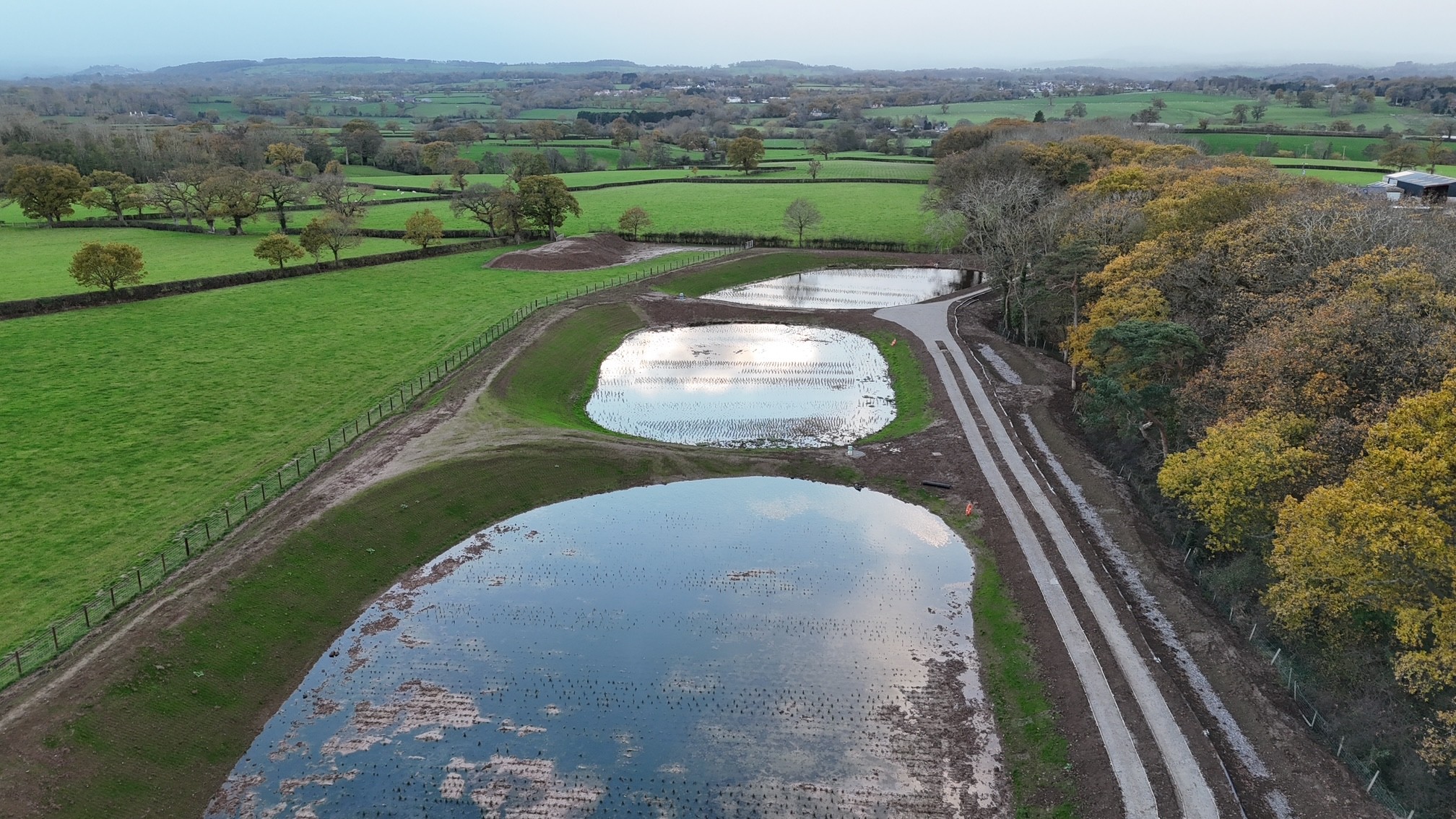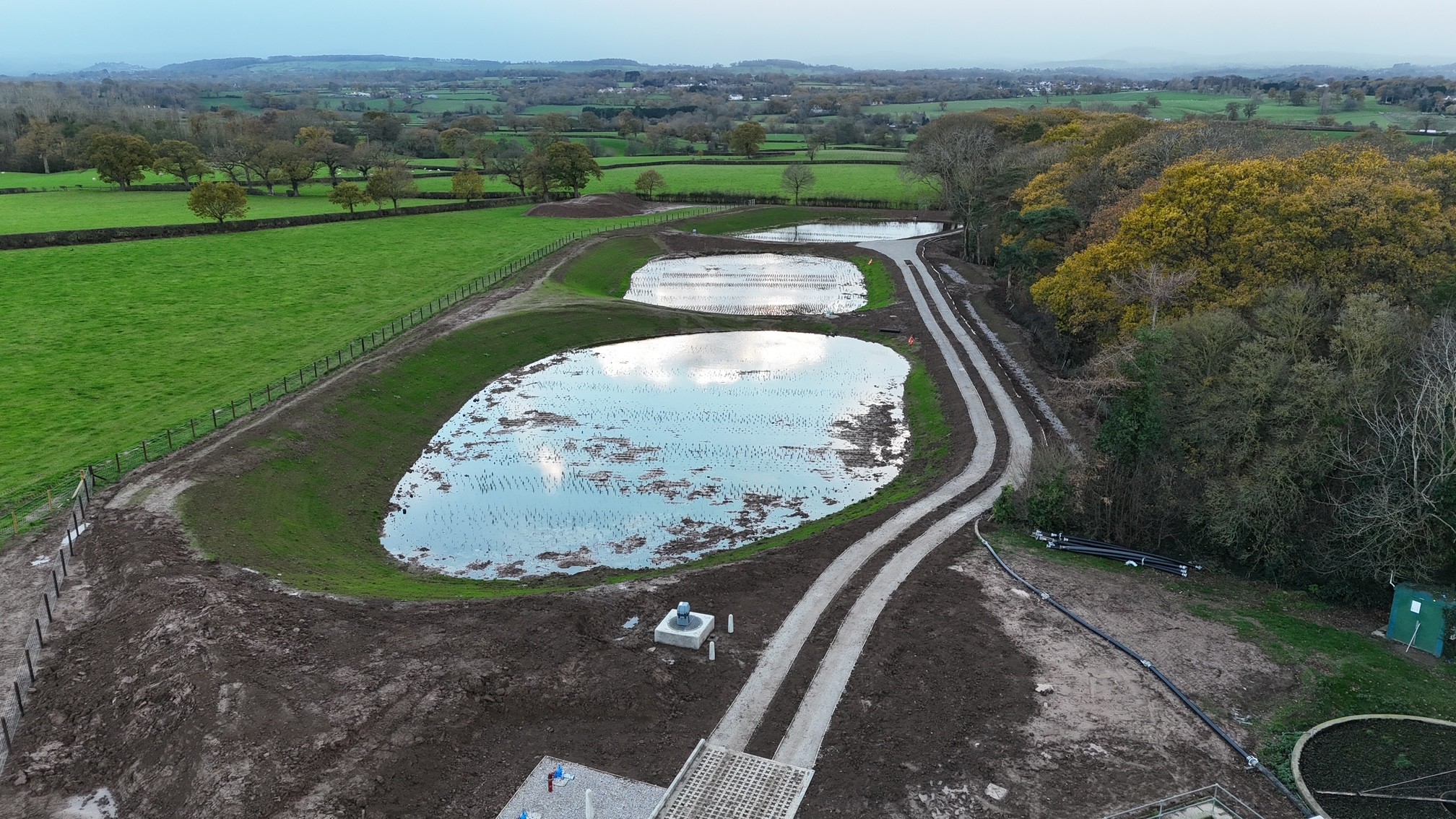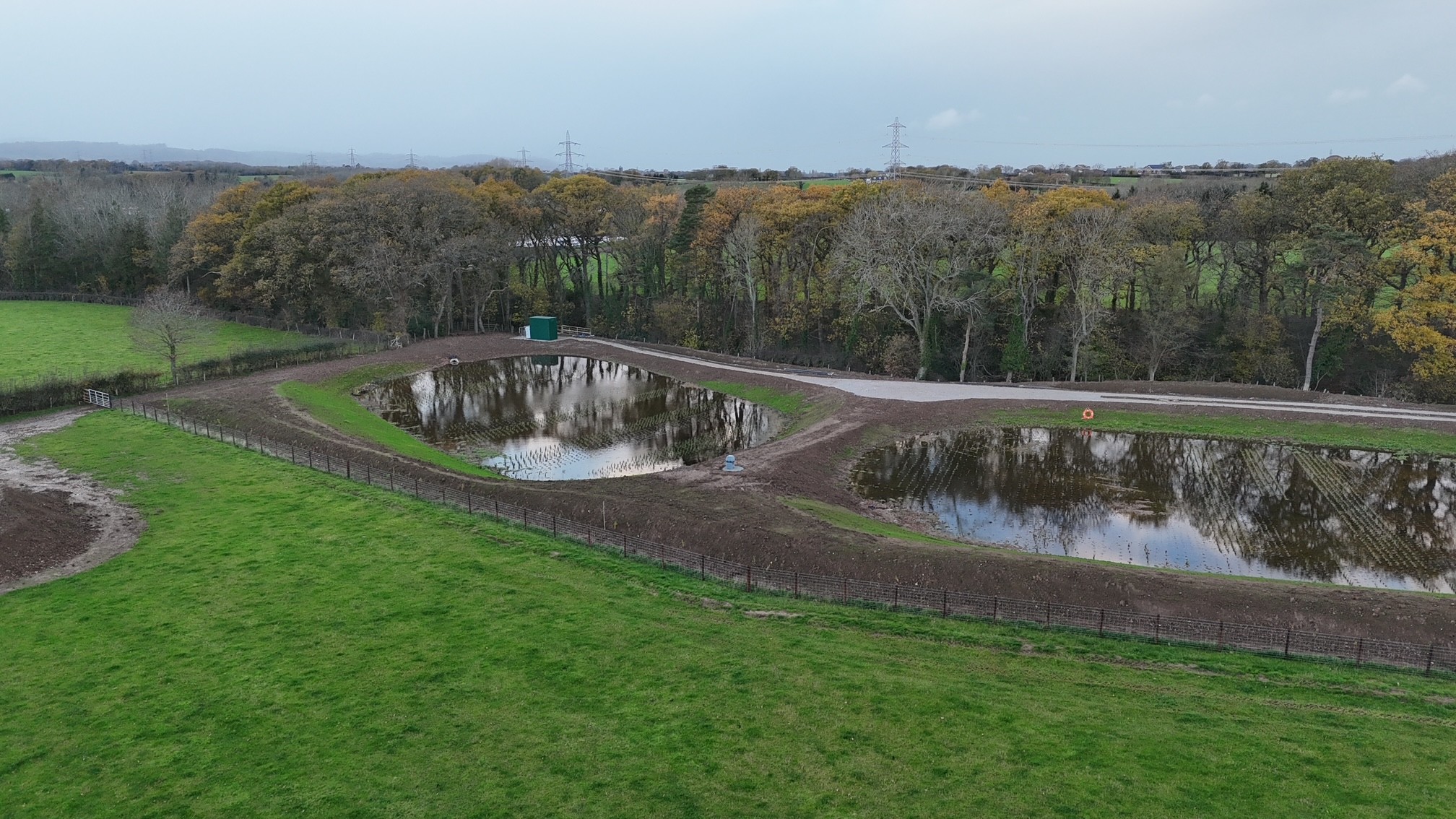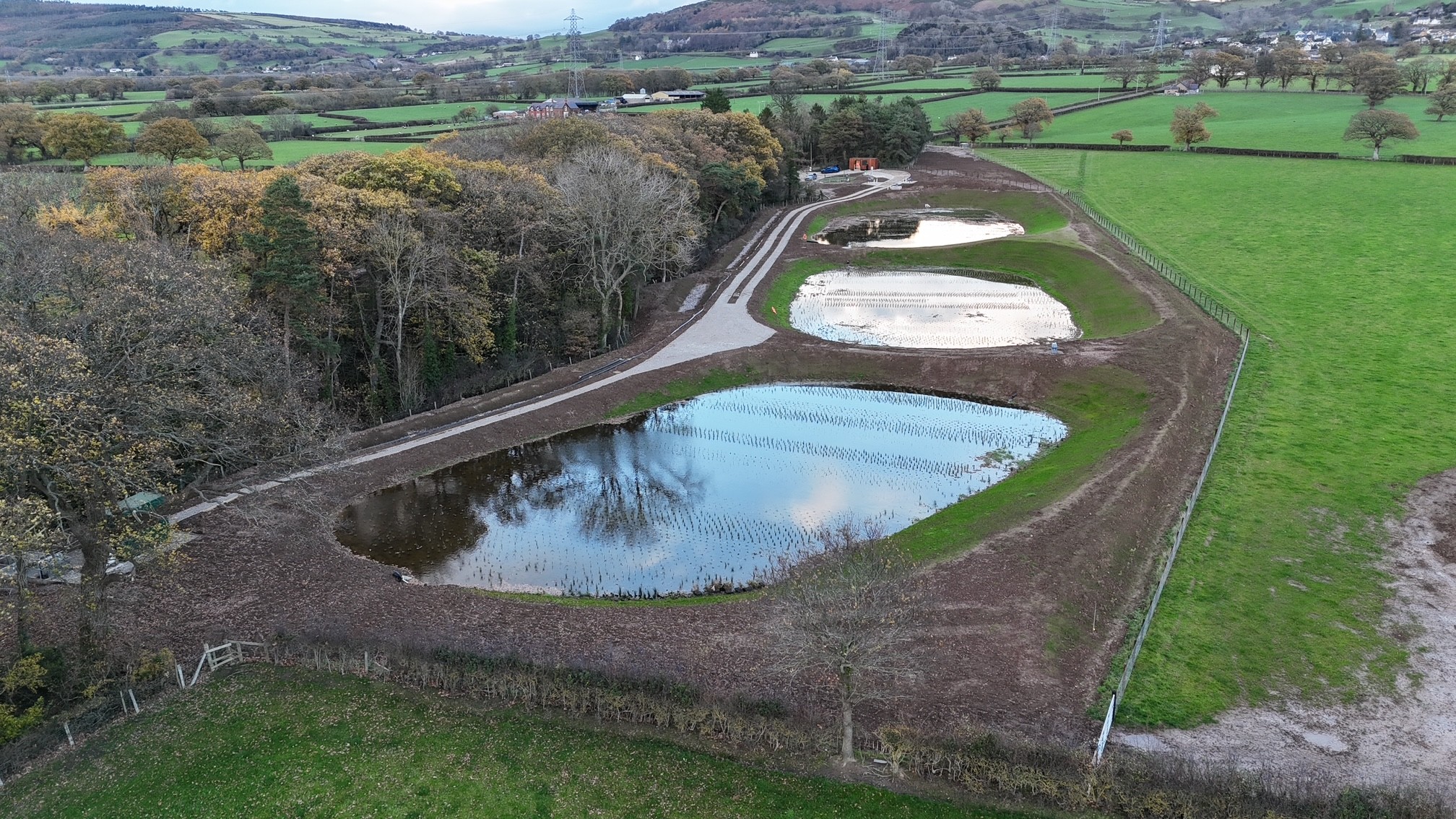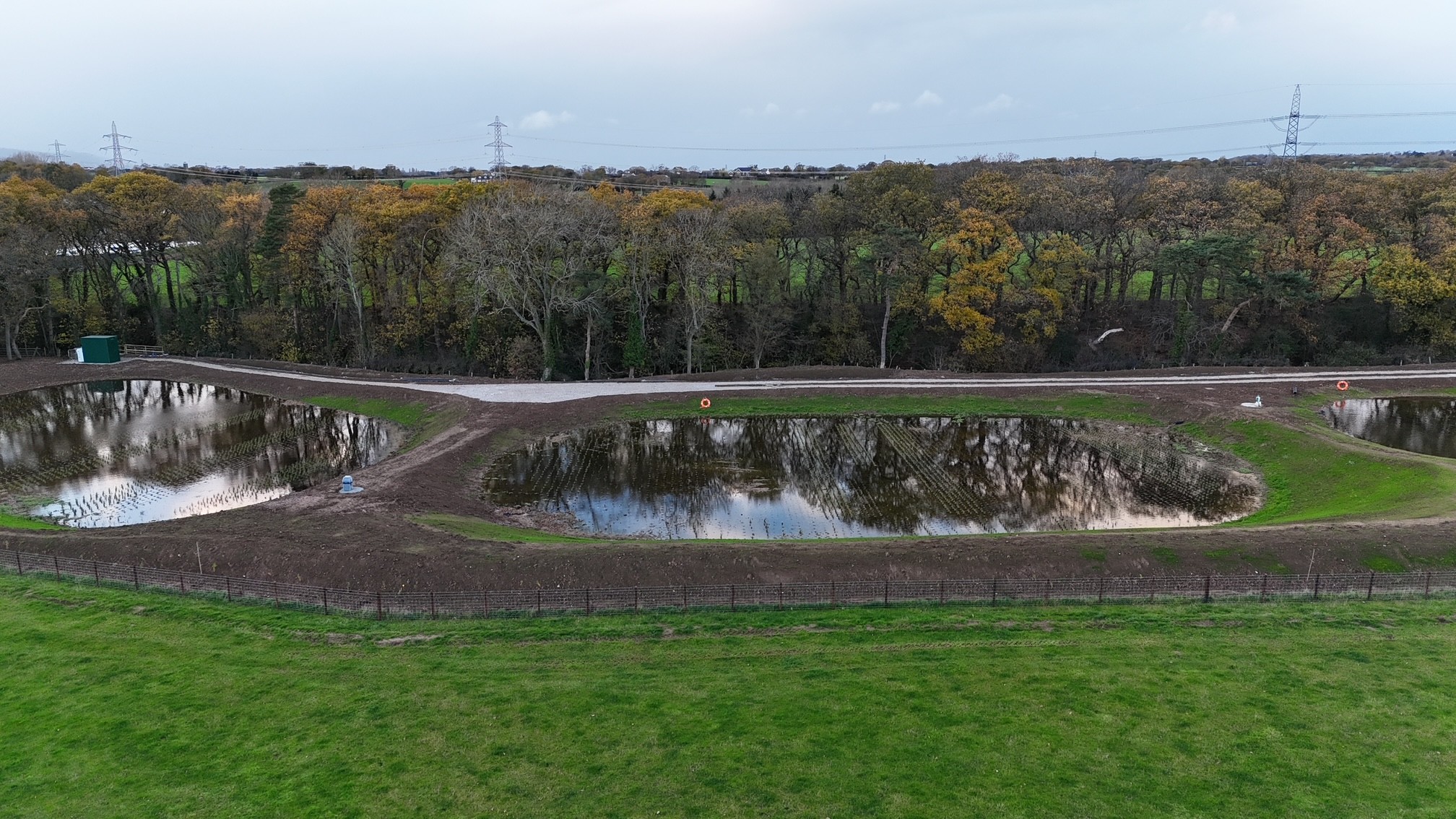


On behalf of DCWW (Dŵr Cymru Welsh Water) and as part of an AMP7 trial, Salix completed works on an Integrated Constructed Wetland (ICW) at Tremeirchion waste water treatment works. This nature based solution is designed to treat wastewater through natural processes, using a diverse range of native wetland species that were carefully selected and contract grown at our Salix nursery for their ability to operate effectively at different water depths and increase resilience and long term performance.
The wetland system consists of three clay-lined treatment cells in series (areas: 1650 m², 1575 m² and 1370 m²), each with a 200 mm water depth and planted with emergent wetland species. Works also included the installation of new headwalls, flow-split chambers and a final sampling chamber. To enhance biodiversity and support the wider system, the project was completed with species rich grassland and native hedgerow planting around the site.
ICWs are designed to improve water quality, specifically by maximising phosphorus reduction through targeted planting. The three cells form a progressive treatment chain, with increasing depth bands and species mixes to optimise contaminant removal.
Over a three month period, Salix delivered the project, starting with excavation of the cells to design formation, segregating and stockpiling suitable material to be reused as clay liner. Alongside the earthworks, drainage and infrastructure works were undertaken, including excavation and replacement of multiple existing manholes, construction of the flow-split and sampling chambers and the installation of three new headwalls. Salix maximised efficiency on site through a detailed programme that reduced plant movement and enabled reuse of site won material, further minimising the environmental impact of the project.
Following final shaping of the batters and placement of the 200 mm topsoil layer, a week’s worth of planting completed the works. The contract growing of the wetland plants ensured complete control over provenance, species quality and availability.
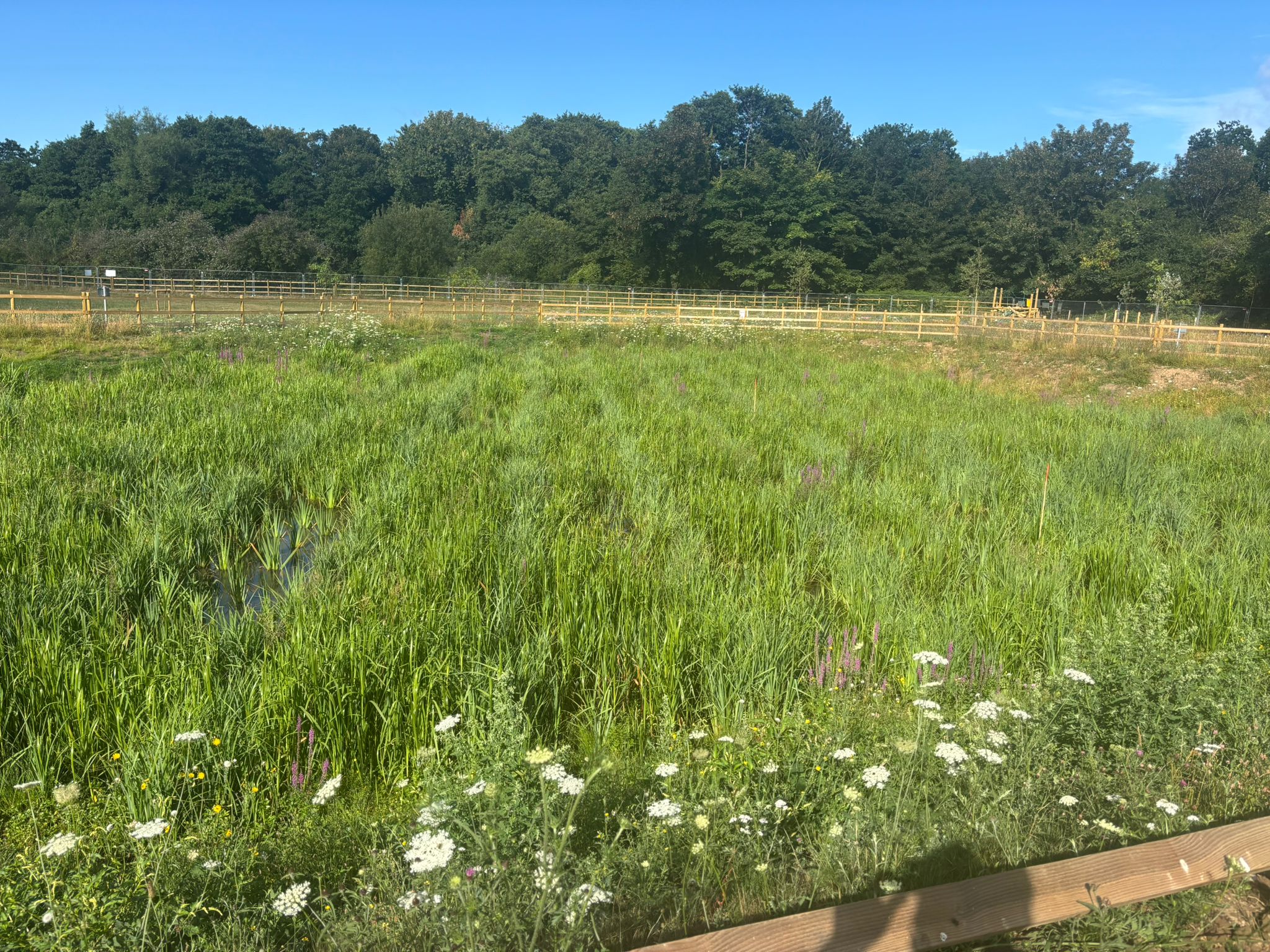
The planting required a specialist approach tailored to the depth and gradients within each of the three wetland cells. Species were grouped into four depth bands: margin plants for approximately 5 cm depth, shallow-water species for around 10 cm, transitional species suited to 15 cm, and deeper-water emergent species thriving at 20 cm. Each cell used these groups in different proportions to support optimal treatment performance and prevent any one species from becoming dominant. The planting schedule was carefully designed by Salix to ensure that the water couldn’t develop any preferential routes and maximised retention time in each cell, enhancing treatment.
Salix’s extensive experience with clay lined wetland systems ensured that the planting was carried out in a way that supports both immediate stability and long-term ecological performance. The wetlands are now being closely monitored, but we are confident that the varied species palette is already delivering significant habitat value, with the system establishing well and providing nature based water quality improvements for years to come.