


At Pont-Y-Felin in South Wales, Salix delivered a fully engineered Integrated Constructed Wetland on behalf of Morgan Sindall for Welsh Water, providing sustainable secondary treatment of stormwater flows from the Pont-Y-Felin Controlled Storm Overflow (CSO) before discharge to the river. The ICW was designed as a low-energy, low-maintenance treatment solution that relies primarily on natural processes rather than mechanical intervention.
The project demonstrates how engineered nature-based solutions can function as critical water infrastructure, improving discharge quality, increasing ecological value and delivering long-term resilience.
Combined Sewer Overflows play an essential role in protecting sewer networks during heavy rainfall. However, storm discharges can carry suspended solids and associated pollutants which require additional treatment before entering sensitive watercourses.
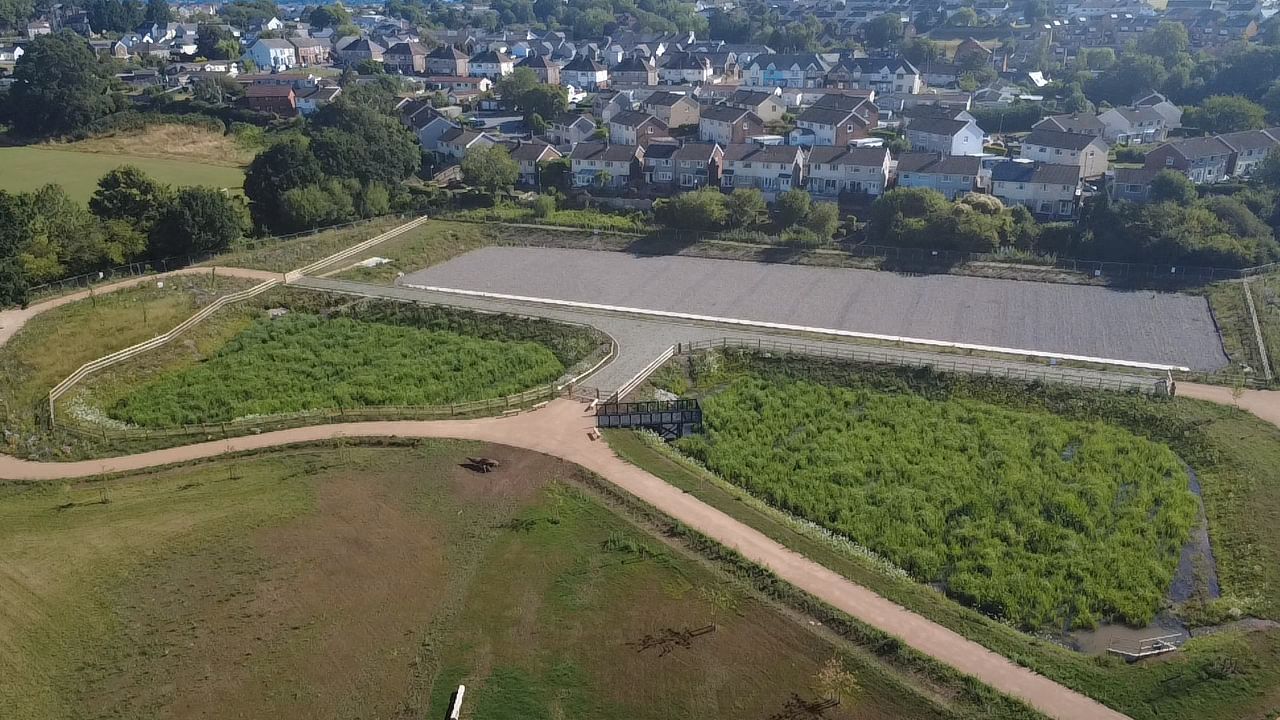
The solution at Pont-Y-Felin was a two cell Integrated Constructed Wetland, designed to provide secondary treatment after a reed bed treatment, by slowing flows and encouraging sediment settlement and promoting biological uptake through emergent vegetation.
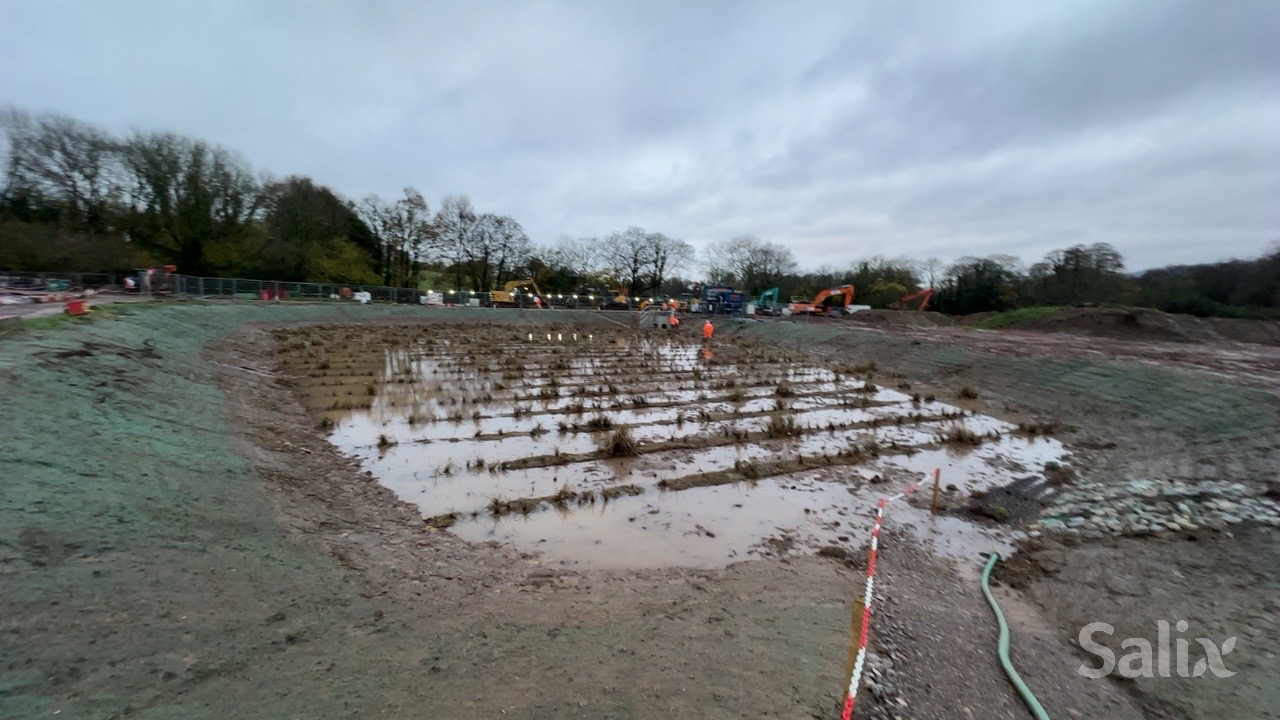
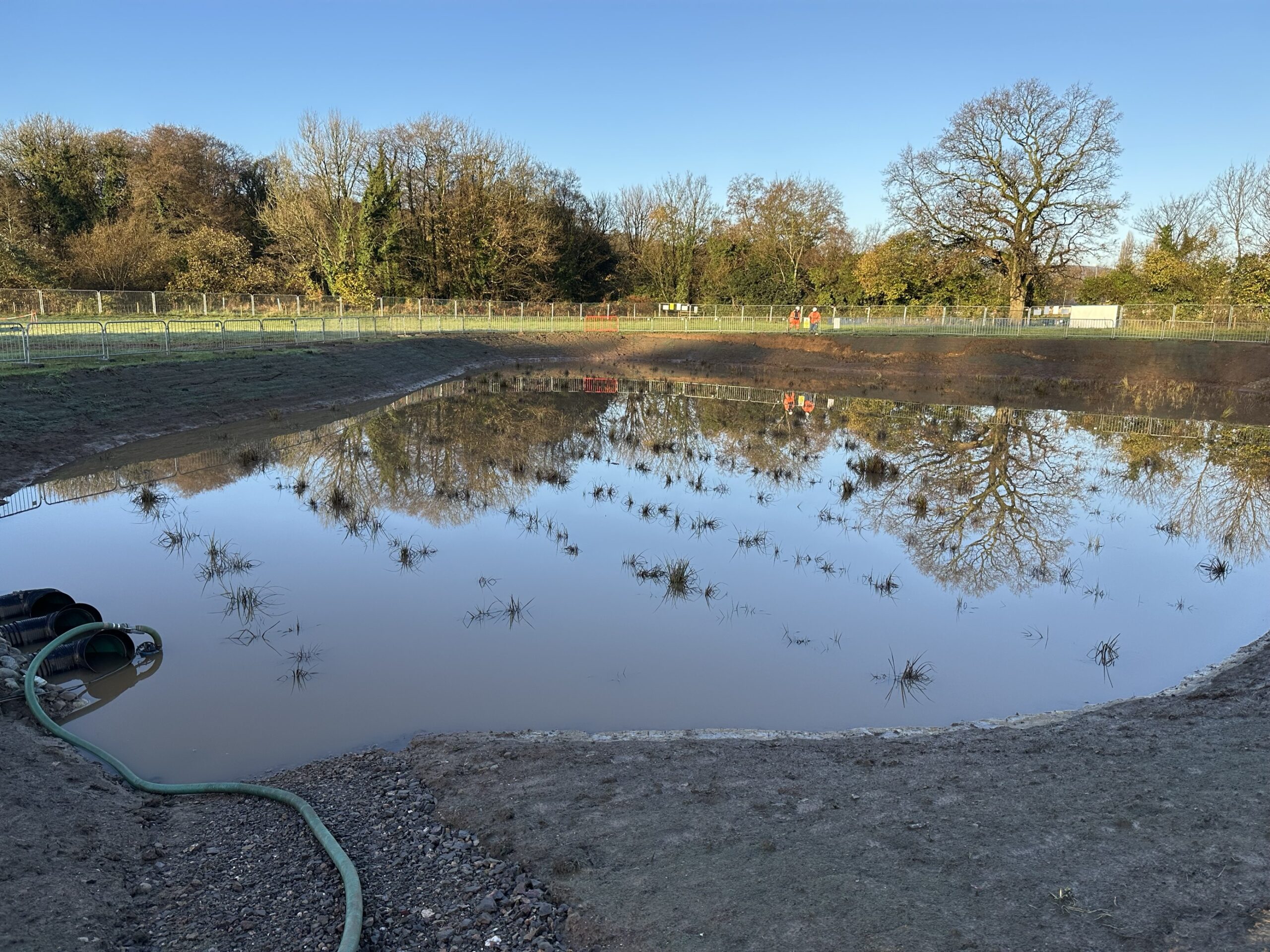
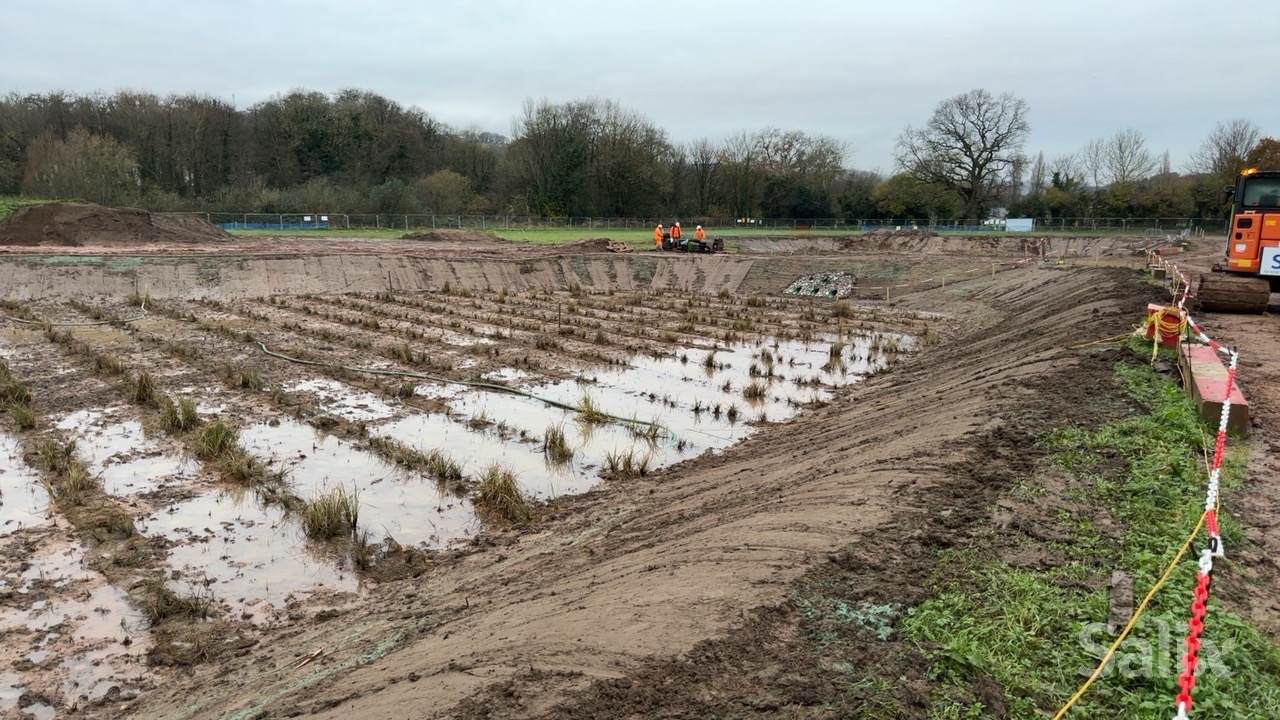
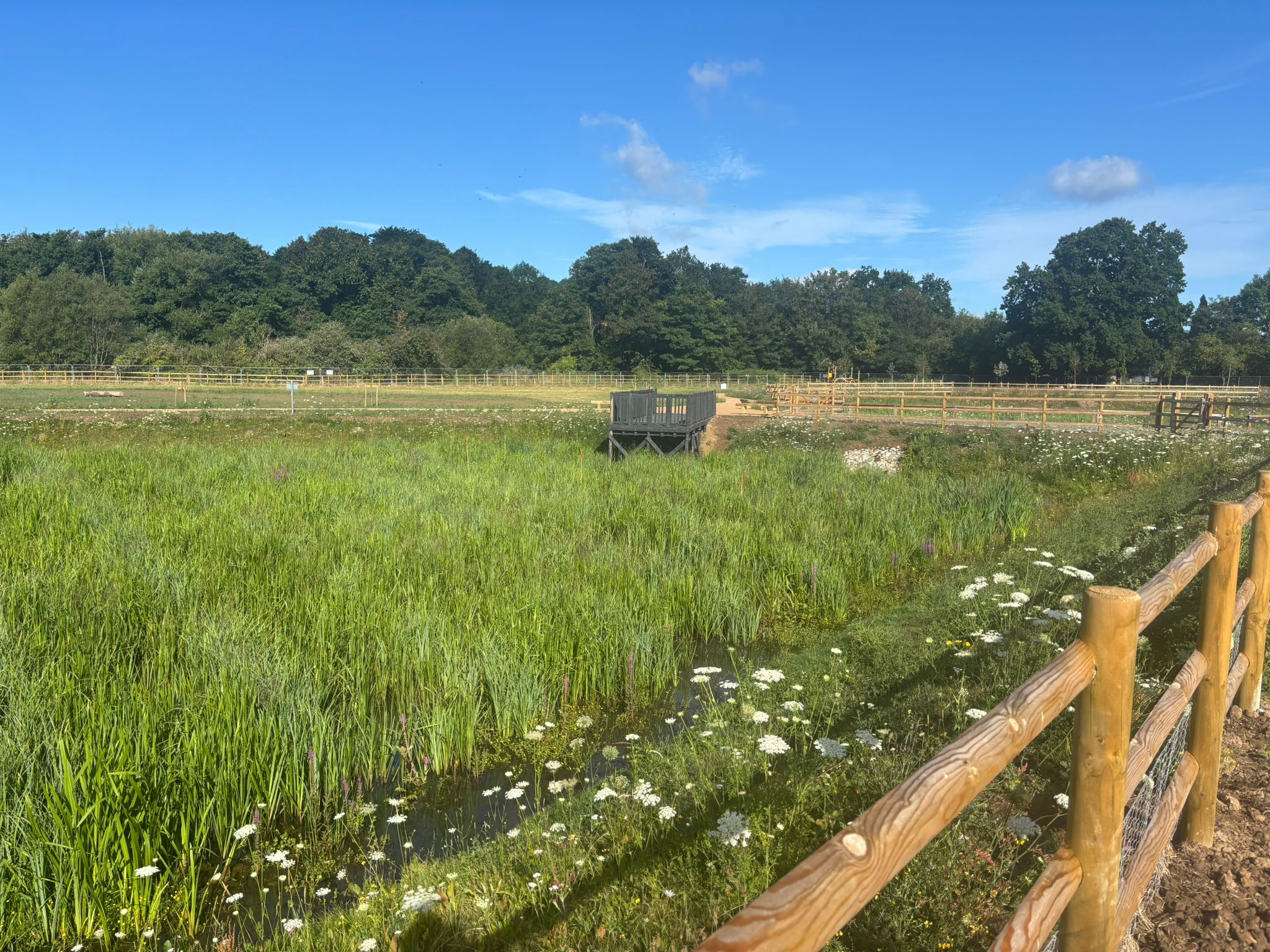
The system comprises two sequential wetland cells covering 2,390 m² within an overall 4,000 m² footprint. Operating at a shallow depth of approximately 150 mm, the wetland maximises contact between water and vegetation. Stormwater first enters Cell 1, where flow velocities are reduced and suspended solids begin to settle. Water then passes into Cell 2 for further polishing before being discharged in an improved state via a controlled outlet structure to the receiving river.
Although natural in appearance, the wetland was precisely engineered. Adjustable outlet structures, stoplogs and water level monitoring points allow operational control and ensure hydraulic performance is maintained under variable storm conditions. During works water levels were carefully staged to support vegetation establishment before reaching full operational depth.
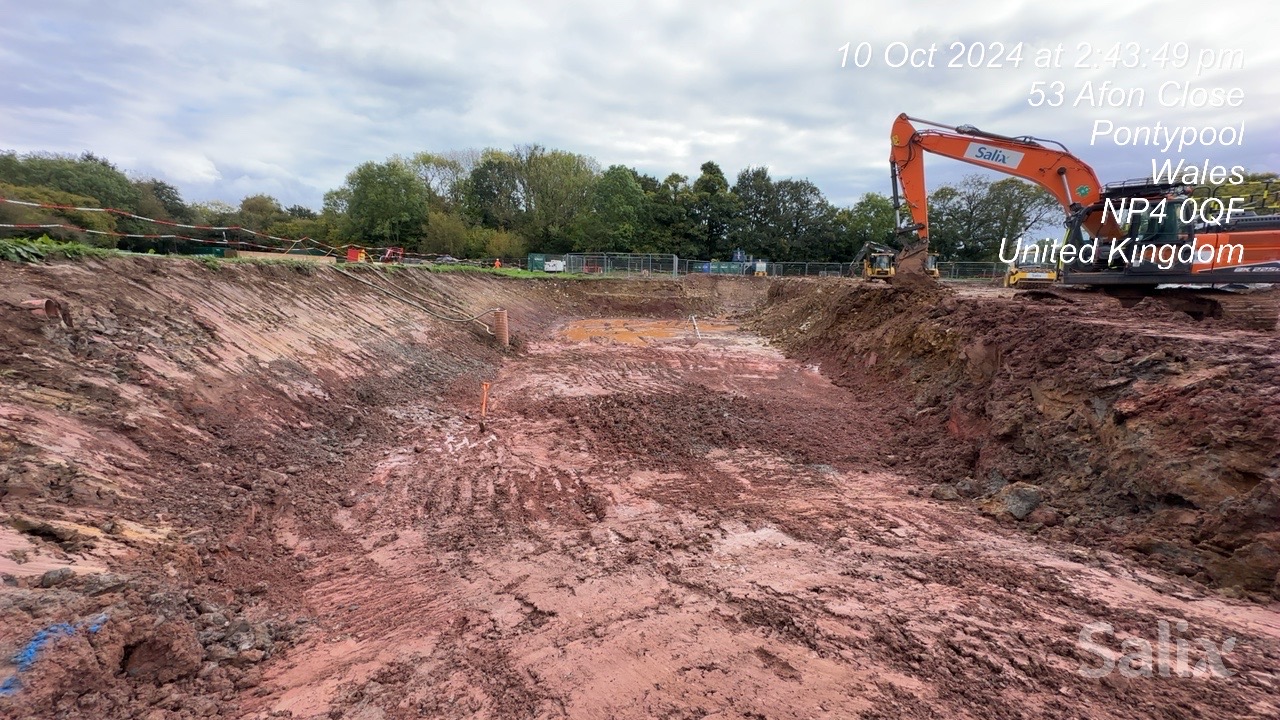
Salix was responsible for constructing the wetland cells and all associated hydraulic infrastructure, including inlets, interconnecting pipework, headwalls, outlet structures and access provisions. Earthworks were undertaken to create carefully profiled shallow basins designed to optimise retention time and hydraulic efficiency.
Alongside the civil works, Salix supplied and installed pre-planted coir products and over 16,000 native wetland plug plants. Species were selected to provide robust treatment performance, rapid establishment and long-term ecological resilience.
The planting palette supports sediment capture, nutrient uptake and biofilm development while also delivering meaningful biodiversity gains.
The integration of pre-established coir systems accelerated functional maturity, enabling the wetland to begin operating effectively soon after completion. Beyond its treatment function, the variety of species across the wetland creates valuable habitat.
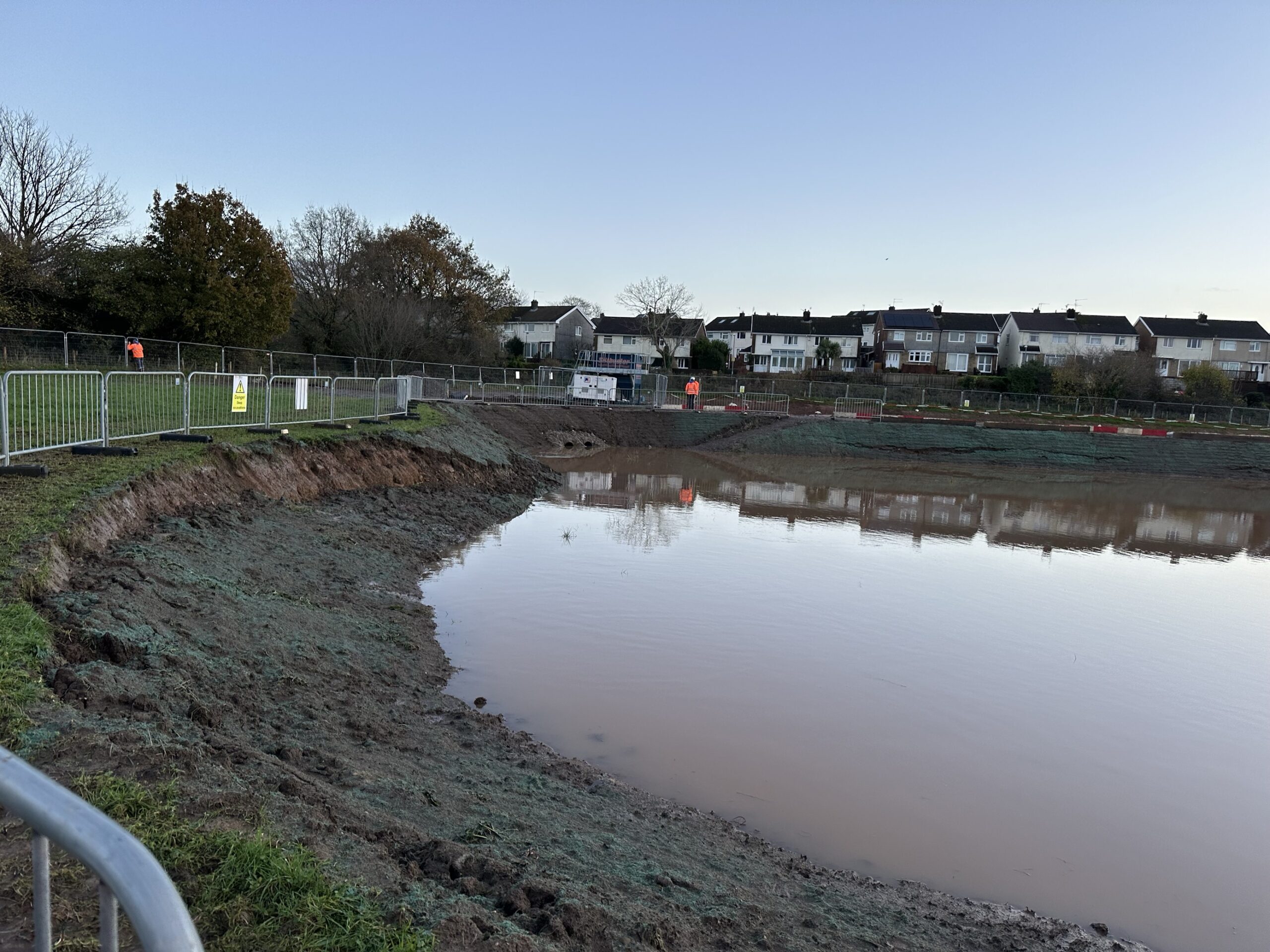
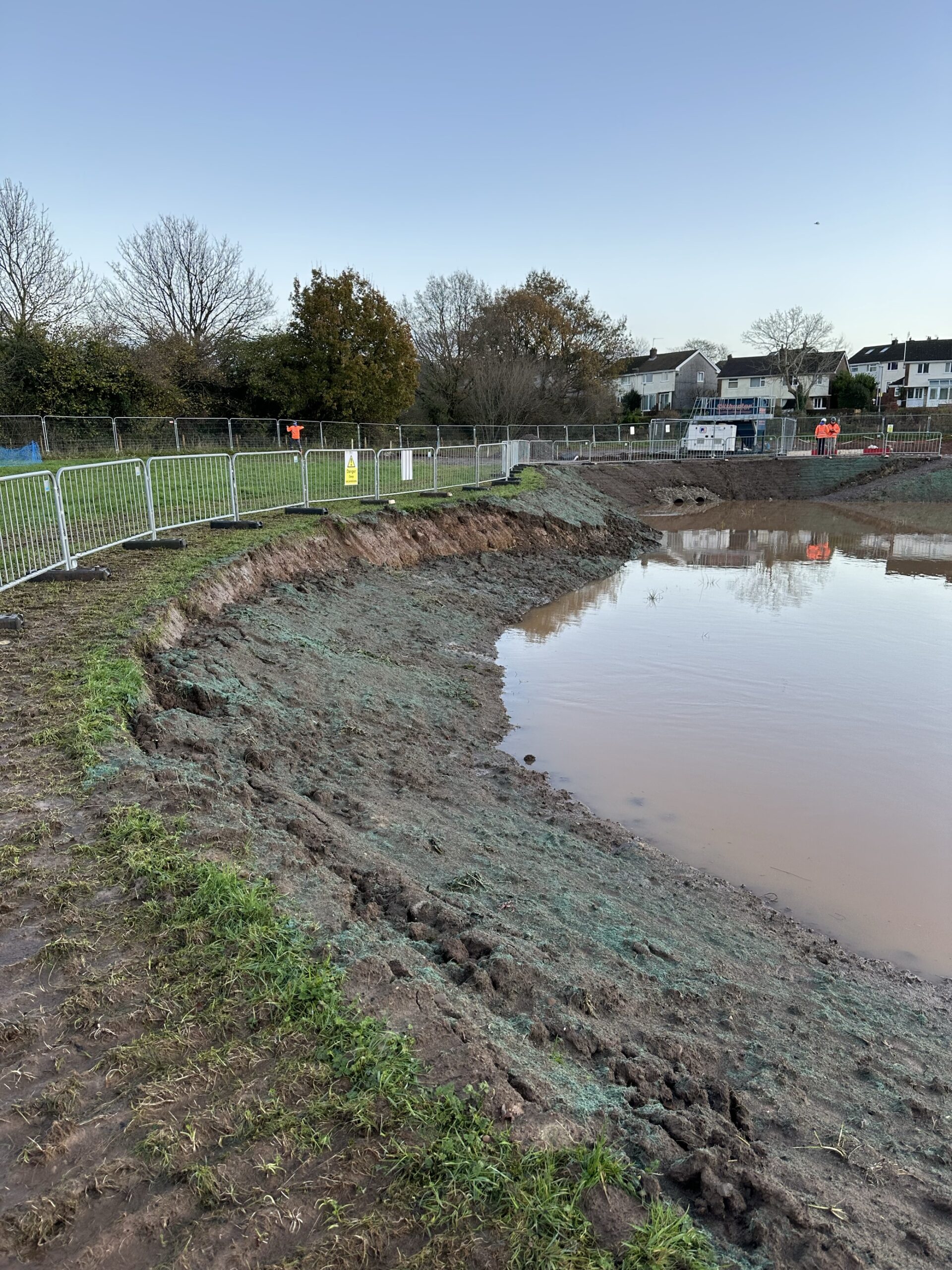
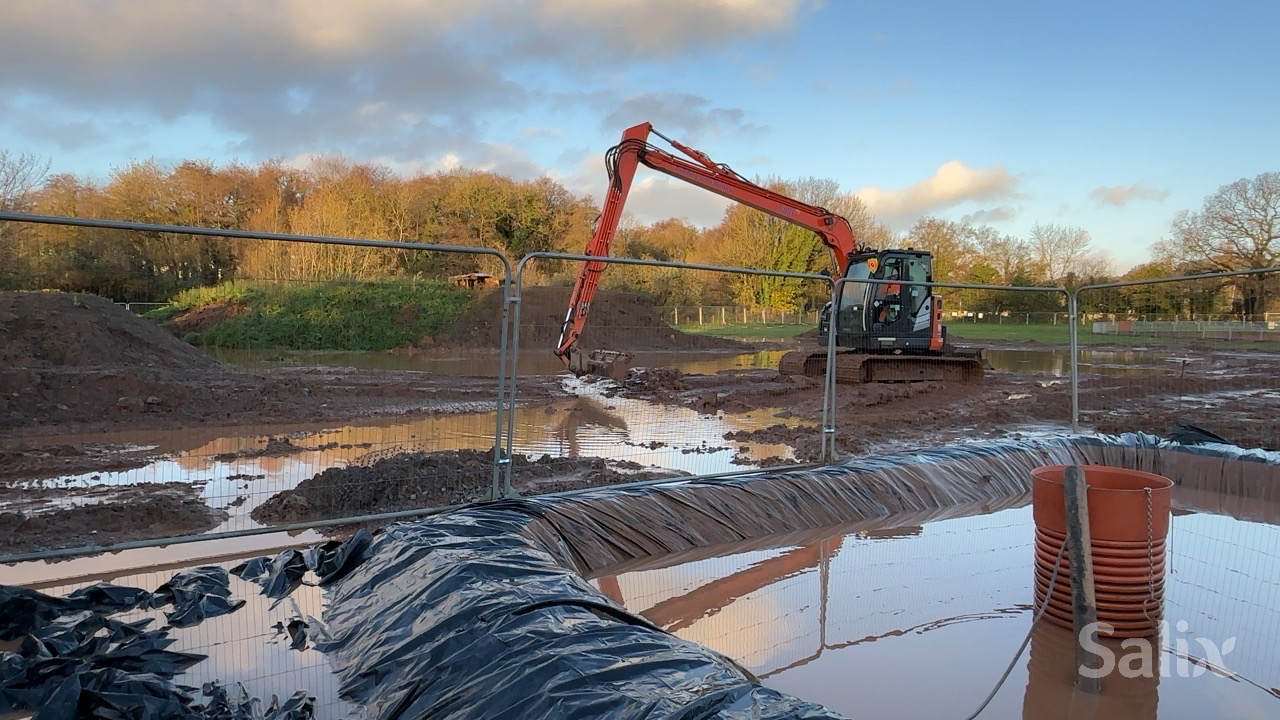
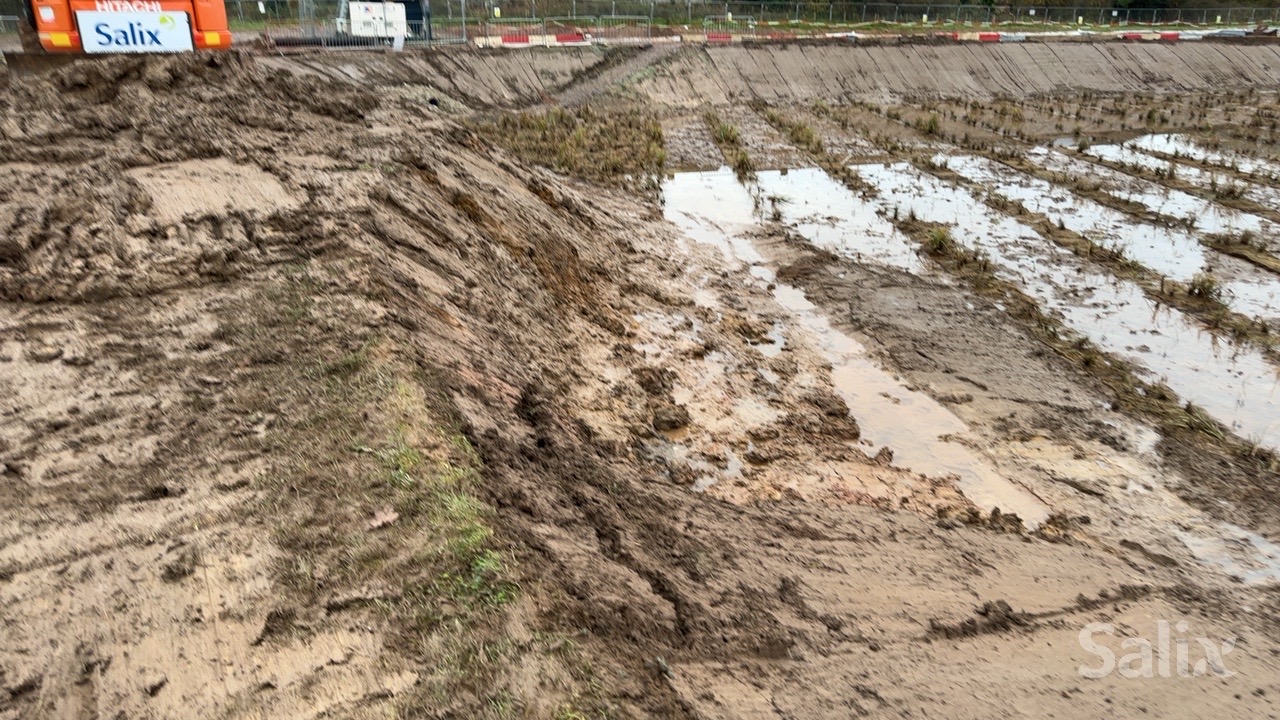
Construction coincided with one of the most severe storm and flooding events to impact South Wales at the time. During peak conditions, both treatment cells flooded to depths of approximately one metre before works were complete.
Significant pumping operations were required to dewater the site, with 2.5 days spent removing floodwater from the newly formed cells. The event caused damage to embankments and washed topsoil into the treatment areas, requiring regrading, sediment removal and reinstatement of formation levels.#
Despite these conditions, Salix successfully restored the design profile, protected the hydraulic integrity of the system and maintained programme delivery.
The experience reinforced the importance of designing wetlands capable of withstanding extreme hydraulic variability and demonstrated the resilience and adaptability of the construction approach.
A structured monitoring and maintenance regime will ensure ongoing performance, including routine inspection of inlet and outlet structures, water level monitoring and periodic assessment of sediment accumulation.

Products used
-
Pre-established Coir RollsCoir Rolls are an organic living revetment that provide erosion control and rapid vegetation establishment. Salix have developed a range of specific species mixes for use in all types of water bodies.
-
Pre-established Coir PalletsSalix produce a wide range of pre-established coir pallets planted with high quality native plant species. Coir pallets are composed from coir fibre which is a sustainable waste product from the husk of the coconut shell.
-
Wetland PlantsSalix are the largest grower of native wetland plants in the UK – perfect for use in green infrastructure, peatland restoration, wetland creation and other habitat projects.
