

Salix was commissioned on a design and build contract for the creation of an integrated constructed wetland (ICW) for the treatment of stormwater on a live sewage treatment works in Hinckley, Leicestershire.
With our design partner, we took the design from outline design stage through to construction issue and have provided all ECI and O&M maintenance manuals as part of the design phase. The scope of the design included, modelling of flows, input into all relevant site/ground investigation scope, on-site supervision of surveys and interpretation of the data and reports that were subsequently provided.
Construction Phase
Construction works started in May 2024, but were subsequently delayed due to a client planning issue, with works re-commencing in July 2024. Works are still ongoing on site with a planned completion in Jan 2025. All works are delivered in-house as self-delivery.
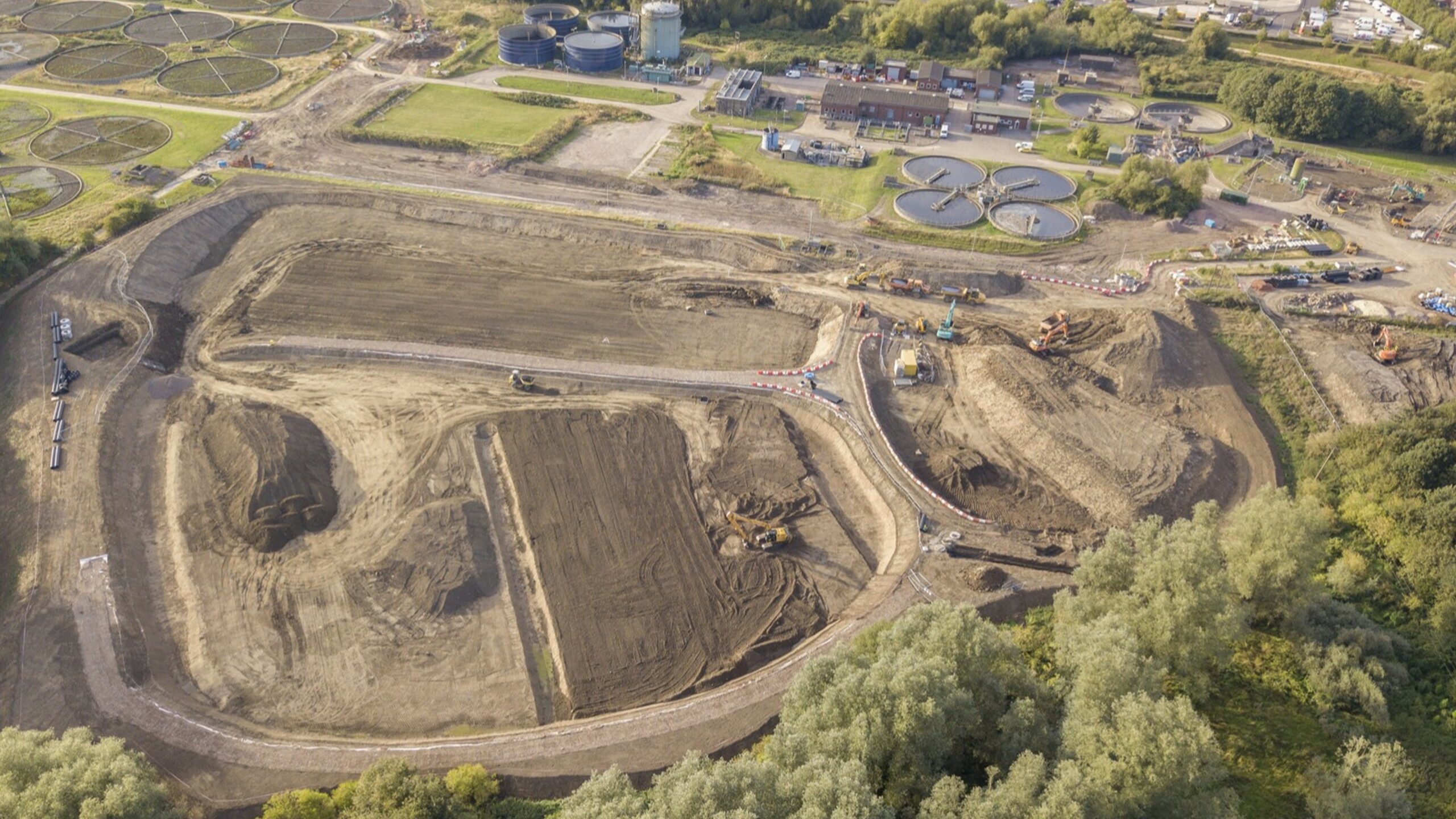
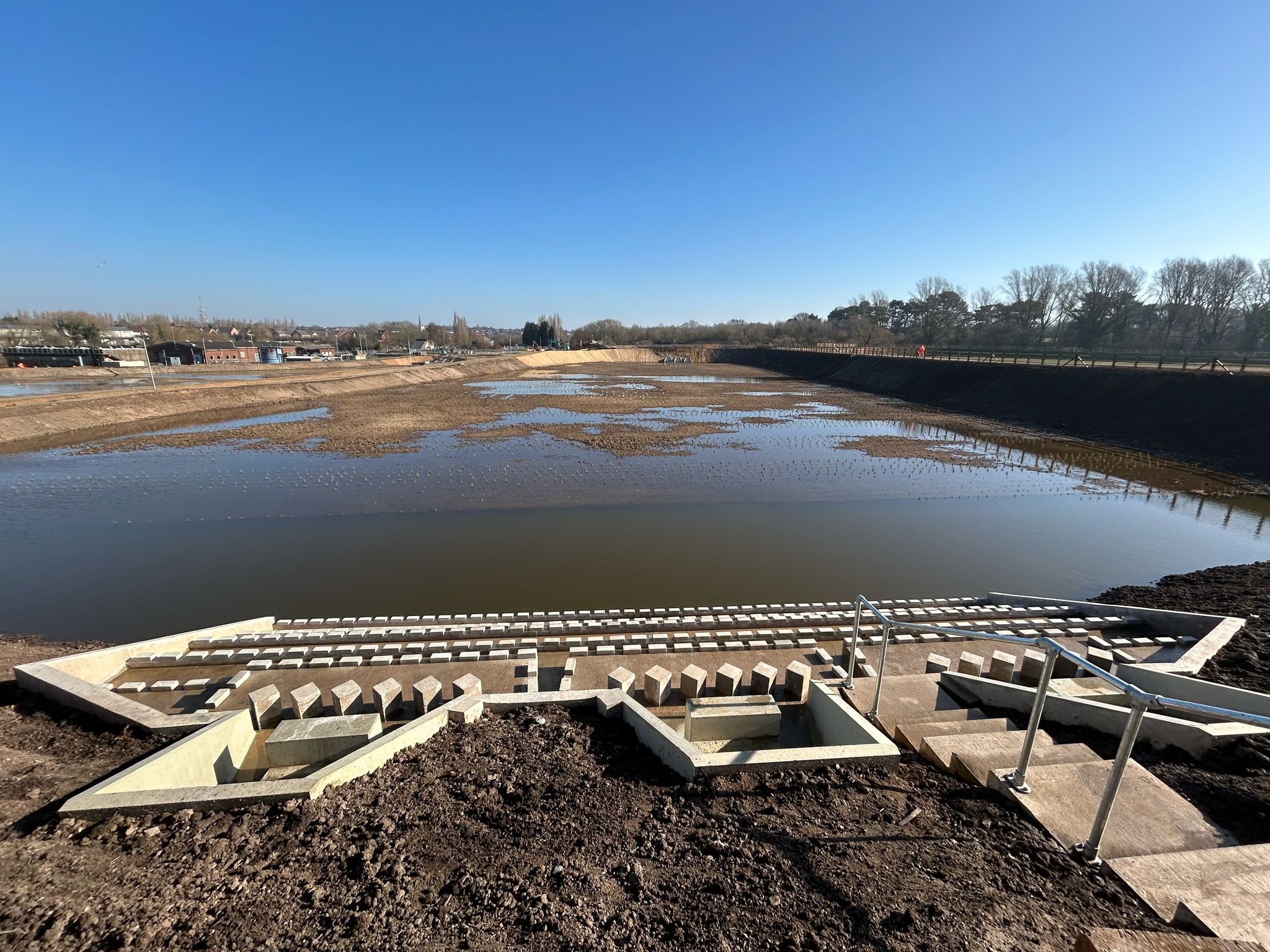
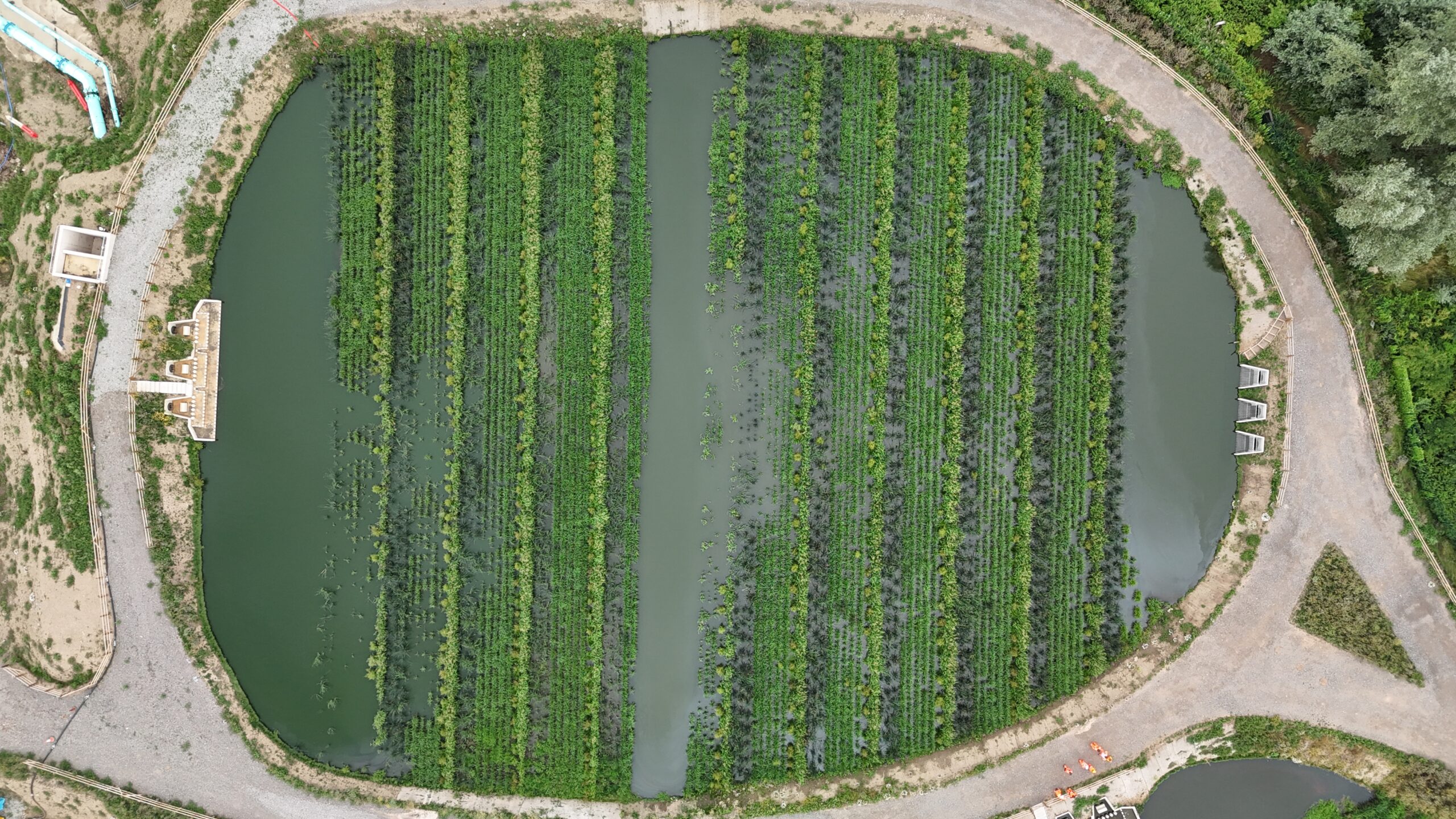
The project was to take a circa 45,000m2 made ground area on an existing sewage treatment works and to create 4 No. of wetland stormwater cells. Each cell has 3 No. of pre-cast concrete headwalls at both the inflow and outflow ends of the cells.
In addition to the pre-cast structures there are cast-in-situ cascade steps, gabion baskets and rip rap to install at each of the inlet / outlet structures.
Using heavy earth moving plant, in the form of D6 Dozers, 30t Moxy’s and 22t Excavators we undertook the earthworks phase, stripping the existing topsoil and stockpiling, doing the cut and fill to formation levels and sourcing and stockpiling of clay.
A 500mm thick clay liner was installed to create the seal at the base of the wetland cells which was taken from stockpiles and installed in layers with sheepsfoot rollers to ensure adequate compaction. A combination of sand replacement tests and on-site steel tube monitoring tests were undertaken to ensure adequate compaction and seal on the clay.
Due to availability of sufficient quantities of site won clay, one of the cells required the installation of a geosynthetic clay Liner.
Hazardous waste from GI data was trial holed, exposed, delineated, segregated and mucked away from site.
Earthworks batters and embankments were installed at 1:2 batters and have been hydroseeded to vegetate the slopes and to provide additional structure to the embankments.
Each of the wetland cells is linked via 3 No. of 600mm Diameter twin wall pipes and a series of 1500mm diameter pre-cast concrete manholes. There is also an open channel drainage system with erosion control installed in the batters at the connection to the outlet to the sewage treatment works.
A provision for the future install of aeration blowers has been included within the scope and we have trenched and installed the ducting network to the feeder pillar from each of the wetland cells.
A network of maintenance access roads have been constructed in addition to the temporary haul routes required during construction.
Fencing, 3 post and rail is installed around the perimeter of steep embankments and betters for delineation.
Due to the level increase above the existing sewage treatment works’ concrete Road, tie ins in the form of concrete road slabs were installed at each ramp to the existing road.
Post Completion and Maintenance
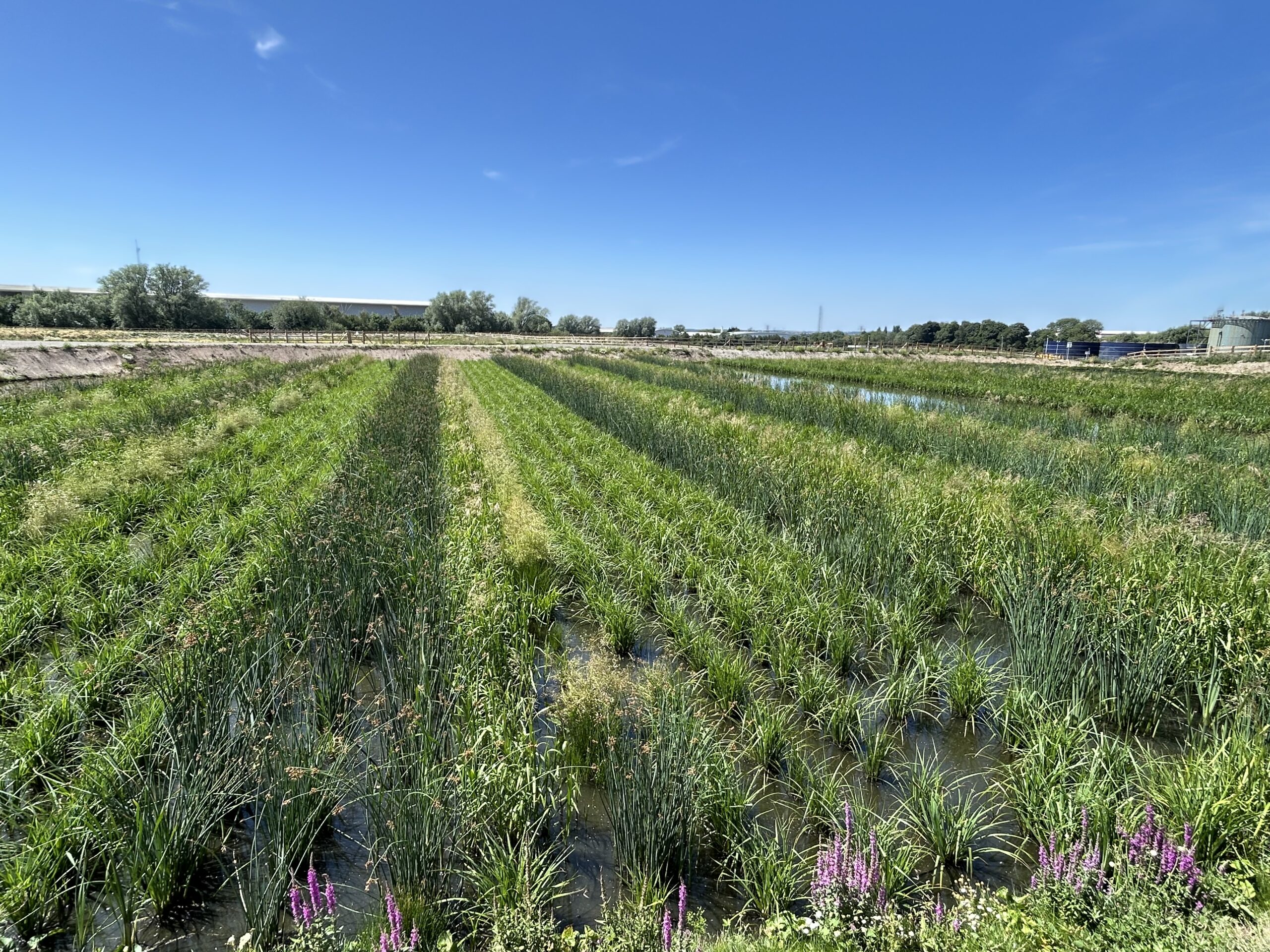
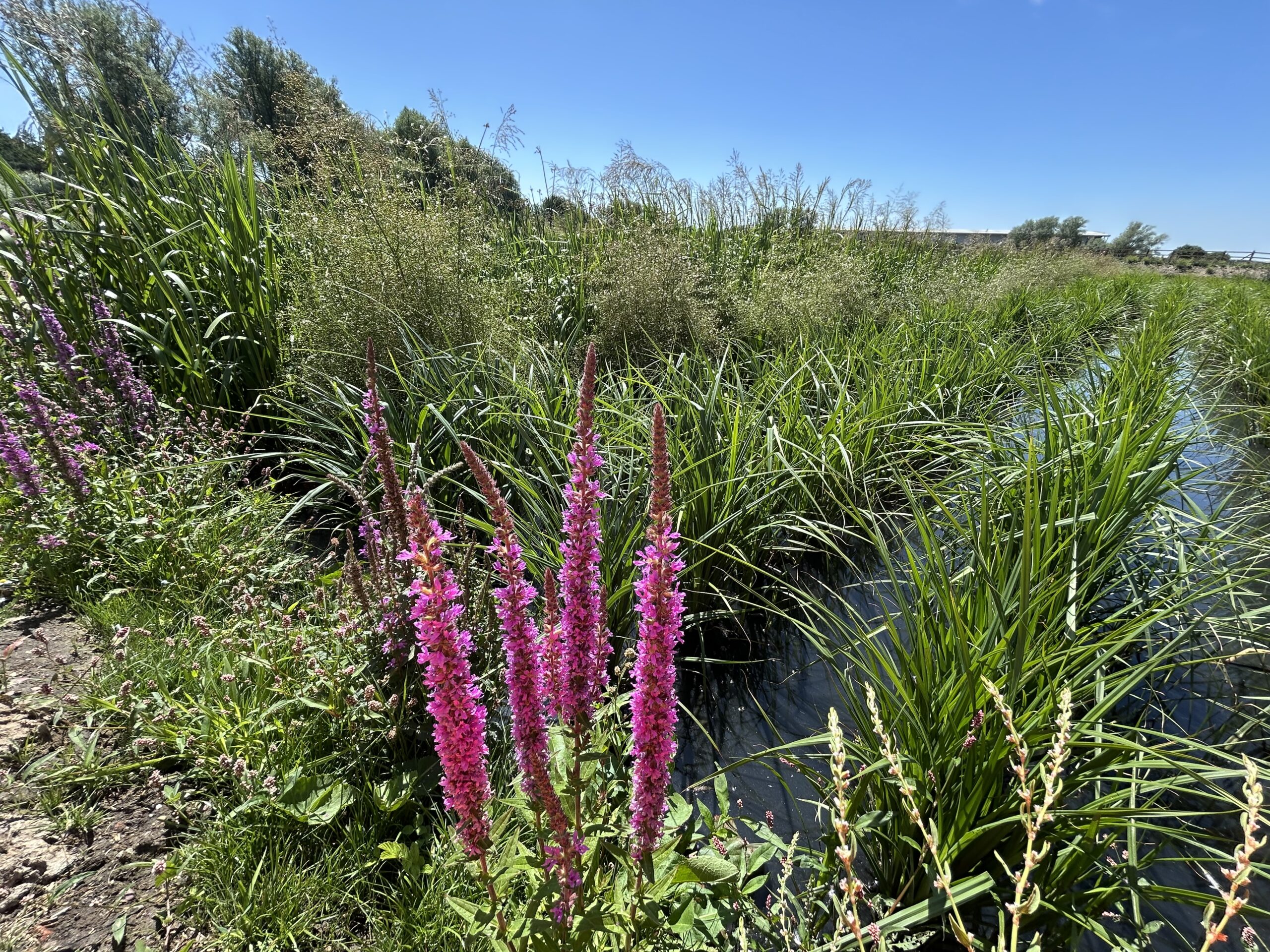
Salix are closely monitoring the site post completion as part of their maintenance plan. Plants are establishing well across the site. With recent periods of drought some cracks have appeared in the soil although around the wetlands and in the channels, there is a clear line of germinated seed and now mature grasses and wildflowers where the soil is moist. Seed has also germinated in small cracks that are formed where moisture is better attained.
The wetlands are already supporting the diverse range of invertebrate and Bird life.
Cells two and three visually have better water quality and the open water is buzzing with invertebrate and other critters.
Marginal plant species have established well and are providing a valuable nectar source.
Cells continue to be monitored to see if the annual buttercup species defoliates sufficiently for the planted species to push through over the next 8 to 10 weeks. Once filled with standing water the whole site and its species will thrive.