


On behalf of Anglian Water, Salix were appointed to enhance the ecological and hydraulic functionality of the River Gadder by creating habitat diversity, stabilising banks, and improving flow dynamics. The design aimed to address the deleterious effects of low flows due to over-abstraction and create sustainable, ecologically rich river environments.
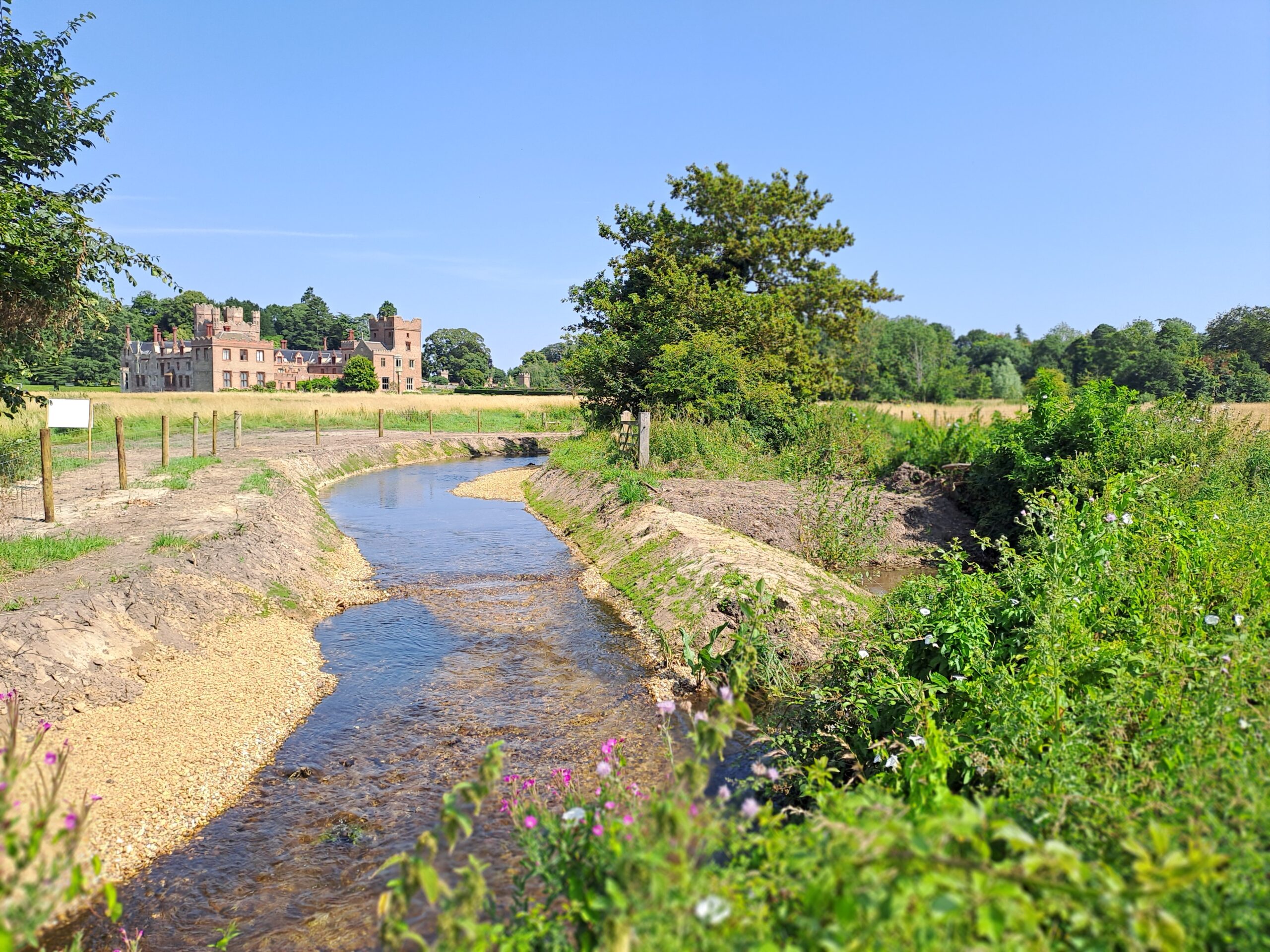
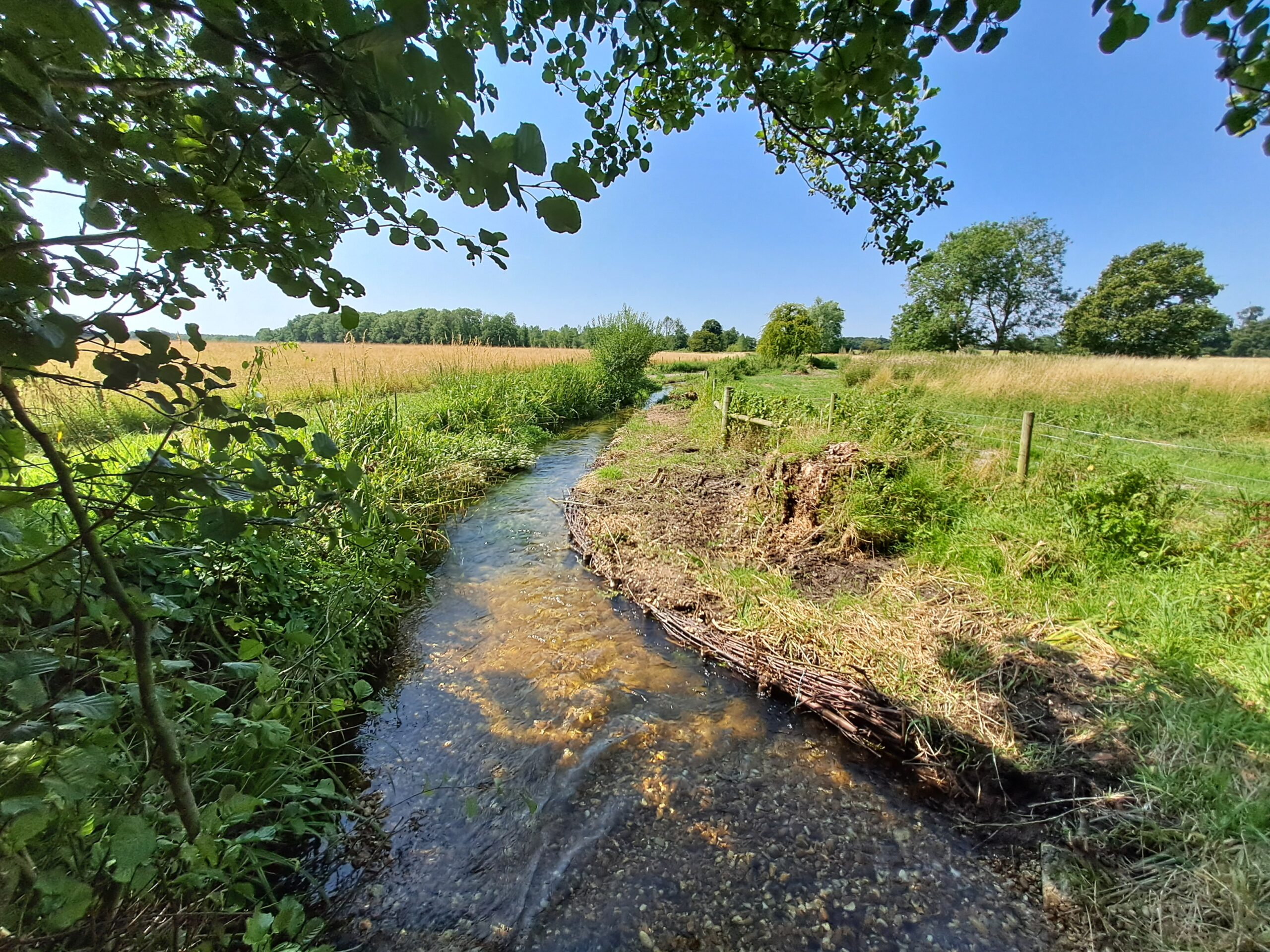
This was achieved through the installation of in-channel features, including Large Woody Debris (LWD), gravel riffles, tree hinging, brushwood berms, riverbank lowering, and the realignment of a 50m section of the channel. These measures were designed to improve flow diversity, habitat quality, floodplain connectivity, and ecological health while mitigating the effects of over-abstraction.
The restoration project incorporated several innovative design elements to enhance stream and floodplain dynamics. Two-stage channels were implemented by reprofiling banks to reconnect overwide channels with the floodplain, improving sediment deposition and reducing flow velocities for enhanced flood management. Raised benches were installed to narrow channels, optimising flow dynamics and promoting self-cleansing processes. Gravel riffles were added to introduce riffle-pool sequences, which improves habitat for aquatic species and enhance oxygenation.
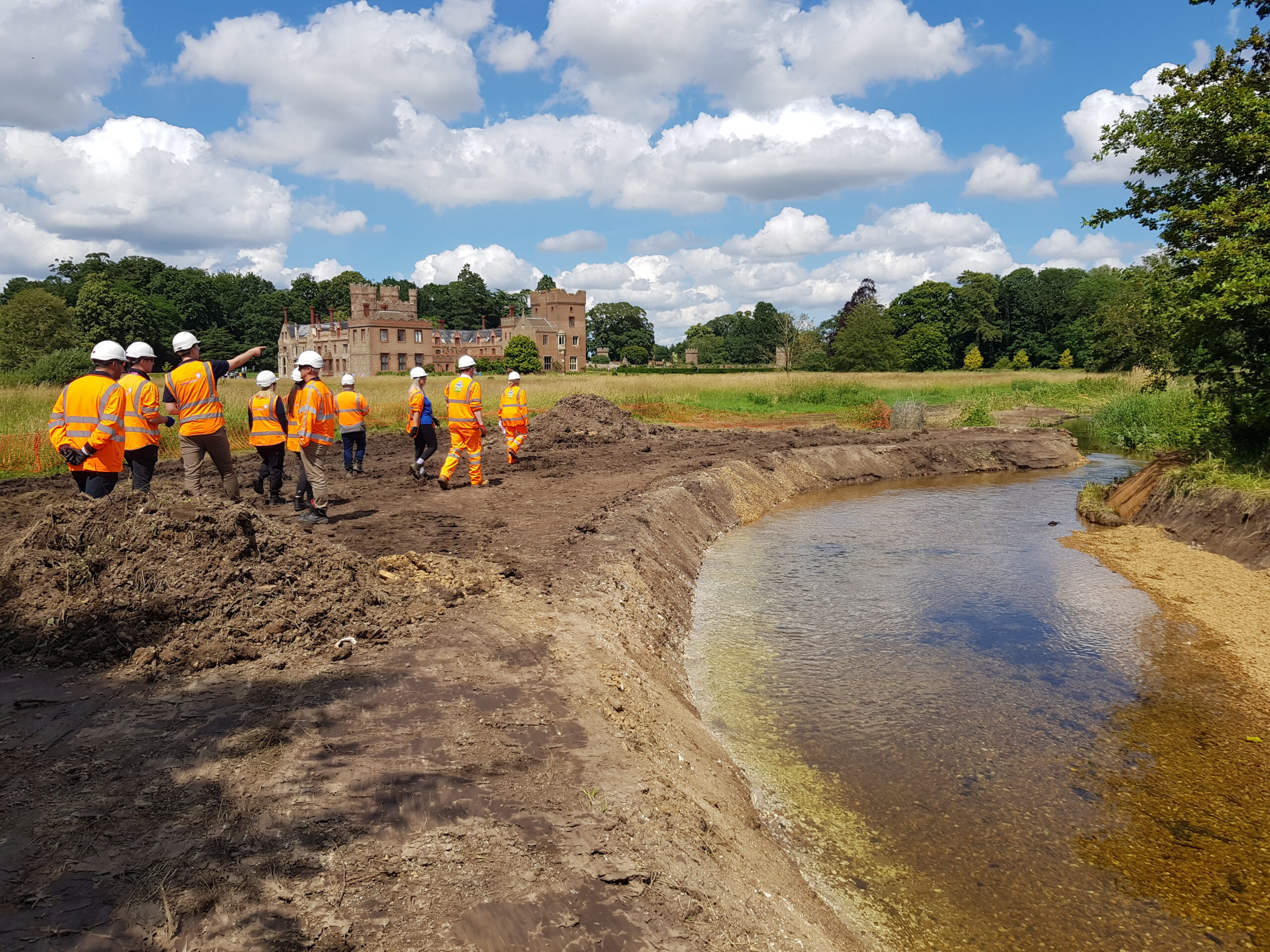
A 50-meter section of the channel was realigned to bypass a culverted pedestrian bridge, addressing bottleneck issues, mitigating erosion, and enhancing hydrology. Riparian zones were improved through tree hinging and selective thinning, which stabilised banks, increased light penetration for undergrowth, and supported biodiversity. Additionally, embankment lowering and the creation of wet woodlands restored natural floodplain connectivity, offering habitats for wildlife and improving flood resilience.
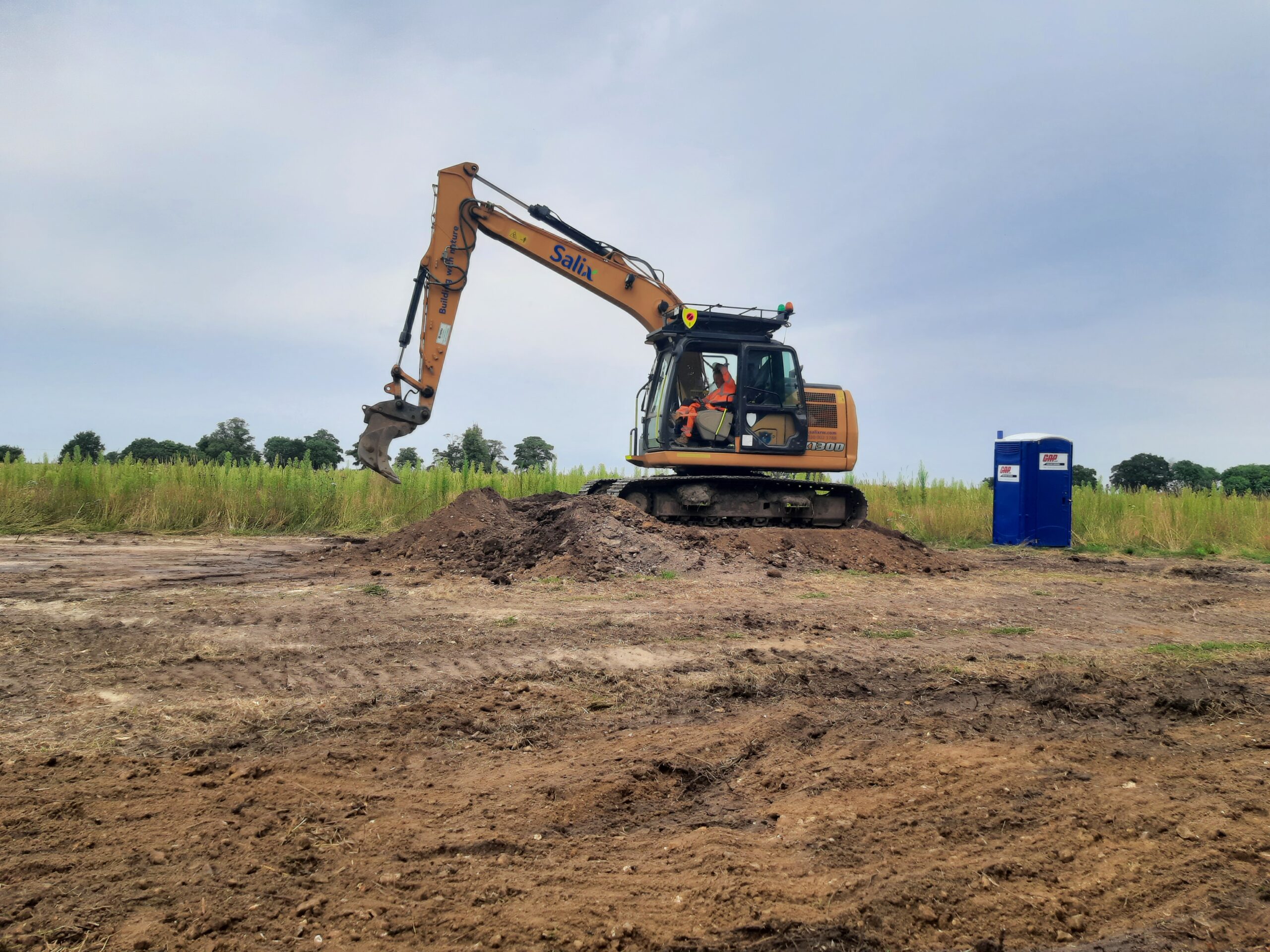
Sedi-Mats and silt wattles were used to reduce the impact of sediment migration and preserve water quality during the works. Track matting was laid to ensure safe access for heavy machinery without causing soil compaction or erosion.
The presence of protected species, such as bats, badgers, otters, water voles, and great crested newts, required daily ecological inspections by an Ecological Clerk of Works (EcCoW) to ensure compliance with legal protections and minimise ecological disturbances. The site’s archaeological sensitivity posed another challenge, requiring exclusion zones and close monitoring to safeguard historical features. Temporary footpath closures and diversions were put in place with Salix staff actively engaging the public to ensure safety and minimise disruption.
The project was completed on time, within budget, and to the satisfaction of key stakeholders. While immediate success was noted in delivery, the long-term impact of the restoration will be evident as the features establish and the river alters over time.

Products used
-
Silt WattleSilt Wattles are a natural method of both sediment control and water erosion control. Silt Wattles are designed for use to slow the flow in channels to treat muddy water by capturing sediment and encouraging natural silt deposition.
-
Brushwood FascinesSalix produce a range of brushwood fascines for use in rivers, canals and lakes. We use brushwood from sustainable sources and can supply various timber types including Ash, Hazel and Willow.
