


Salix was appointed by Bam Nuttall to address significant erosion issues along the Calverley Riverbank in Horsforth, Leeds. The project aimed to enhance riverbank stability through the installation of Root-Wads and an in-river causeway to protect the environment and prevent further erosion.
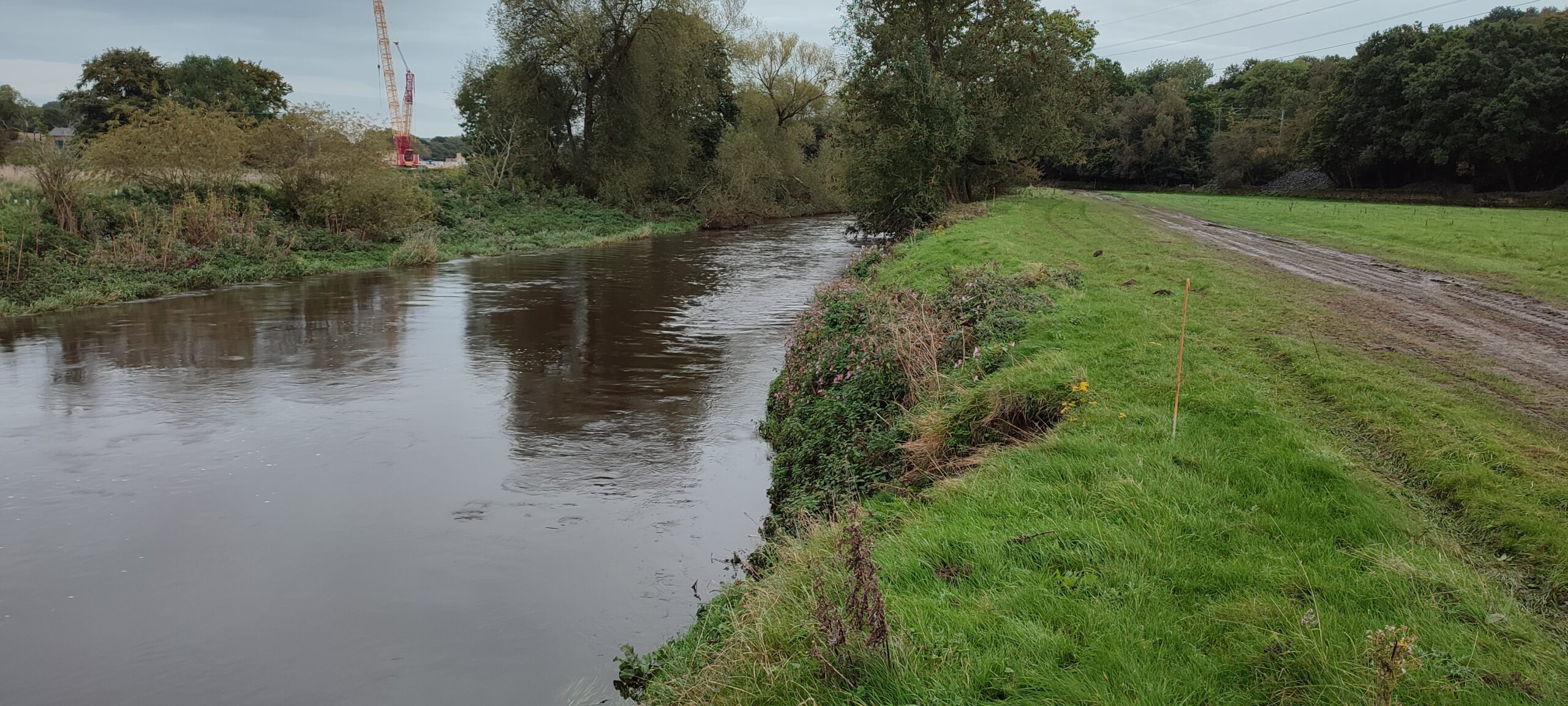
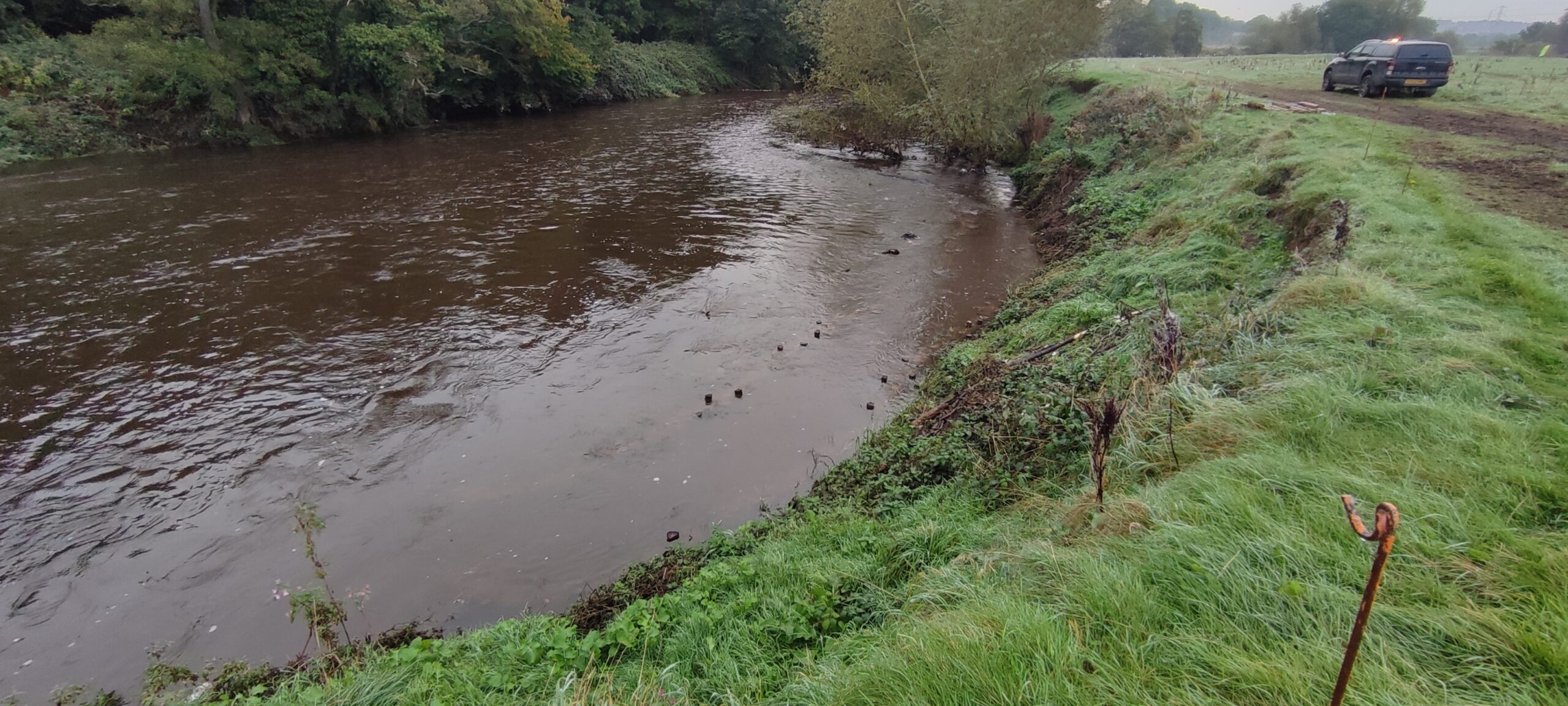
The primary issue was severe riverbank erosion, which threatened the integrity of the land surrounding the river. The client, Bam Nuttall, needed a solution to secure the bank and prevent further damage. Traditional erosion control measures were insufficient for the scale of the problem, so an innovative approach was required.
The solution: installing root-wads and backwater features designed to protect the bank and mitigate the effects of high river flows. This was achieved by securing large wooden structures to the bank using stakes and bundling small trees and branches to absorb and deflect the river’s power.
To address the client’s needs, Salix’s experienced team came together with a comprehensive plan that involved both technical expertise and robust project management.
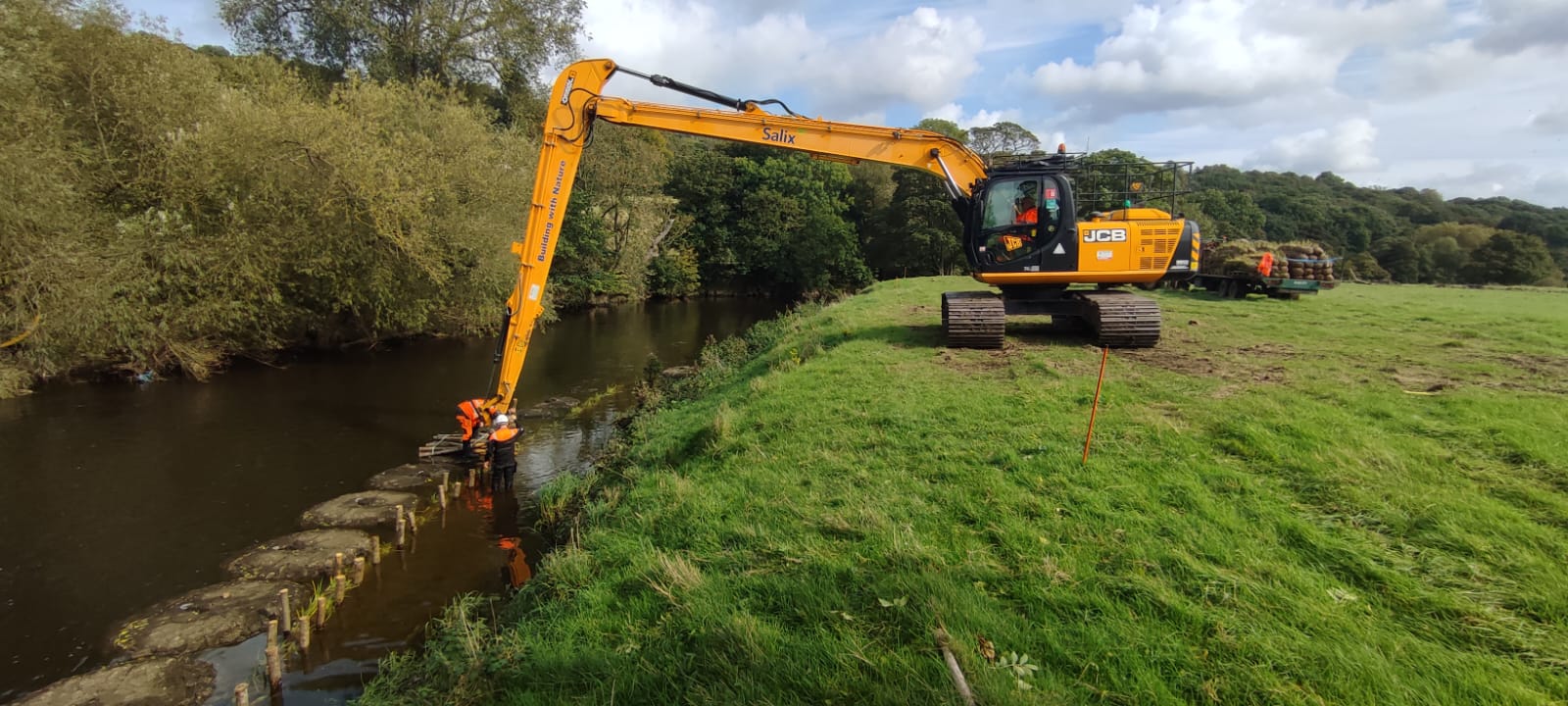
Key activities included the manufacturing and installation of 325 two-tonne Aqua Rock Bags, filled on-site with Bam Nuttall supplying the necessary rock material. These provided further stabilisation for periods of high flow, complemented by coir rolls and chestnut stakes to ensure long-lasting reinforcement of the riverbank. Additionally, the team installed 60 meters of Root-Wads along the riverbank, a vital step in promoting ecological stability. Six bespoke backwater features were also constructed, following detailed design specifications to ensure precise adherence to the project’s ecological and structural objectives.
An array of machinery was used to deliver the project efficiently and safely. This included 12-tonne and 22-tonne long-reach excavators for precision work, a tractor and trailer for effective material transport, and specialised tools such as breakers and grabs for seamless installation. The use of a bubble tubing kit ensured effective sediment control for the duration of the works. Throughout the project, local landowners were kept informed about the ongoing works, ensuring transparency and cooperation. Additionally, the project required a flood risk activity permit (FRAP), which was successfully obtained to ensure that the work complied with environmental regulations.
Salix encountered unexpected setbacks due to high river levels and flooding. These conditions led to a delay of approximately 15 days, extending the duration of the project beyond the anticipated completion date. The high-water levels rendered parts of the site inaccessible, halting work at various stages and prolonging the construction process. The river’s unpredictable nature highlights the importance of timing when planning such projects, as weather and water levels play a significant role in the success of in-river works.
Despite these challenges, the team at Salix adapted by adjusting work schedules and focusing on the tasks that could proceed during lower water levels. This ensured that, while the timeline was extended, the project could still be completed to the required standards.
Products used
-
Aqua Rock Bags®Ecological AquaRockBags are tough revetments that can be used to protect assets in rivers, deep water and intertidal projects.
-
Pre-established Coir RollsCoir Rolls are an organic living revetment that provide erosion control and rapid vegetation establishment. Salix have developed a range of specific species mixes for use in all types of water bodies.
-
Silt Bubble BarriersSilt Bubble Barriers control turbidity and pollution, including silt and oil, downstream of river restoration works and construction sites.
