


CADW employed BSG Ecology to produce a site-wide Habitat Enhancement and Management Plan for Caerphilly Castle. This has enabled Cadw to help deliver their obligations under the Wellbeing of Future Generations (Wales) Act (2015) and the Environment (Wales) Act (2016).
Part of the works required biodiversity enhancement measures which were both flexible and appropriate to the site, respecting the archaeology and striking a balance between the different uses of the castle from fishing to wedding functions.
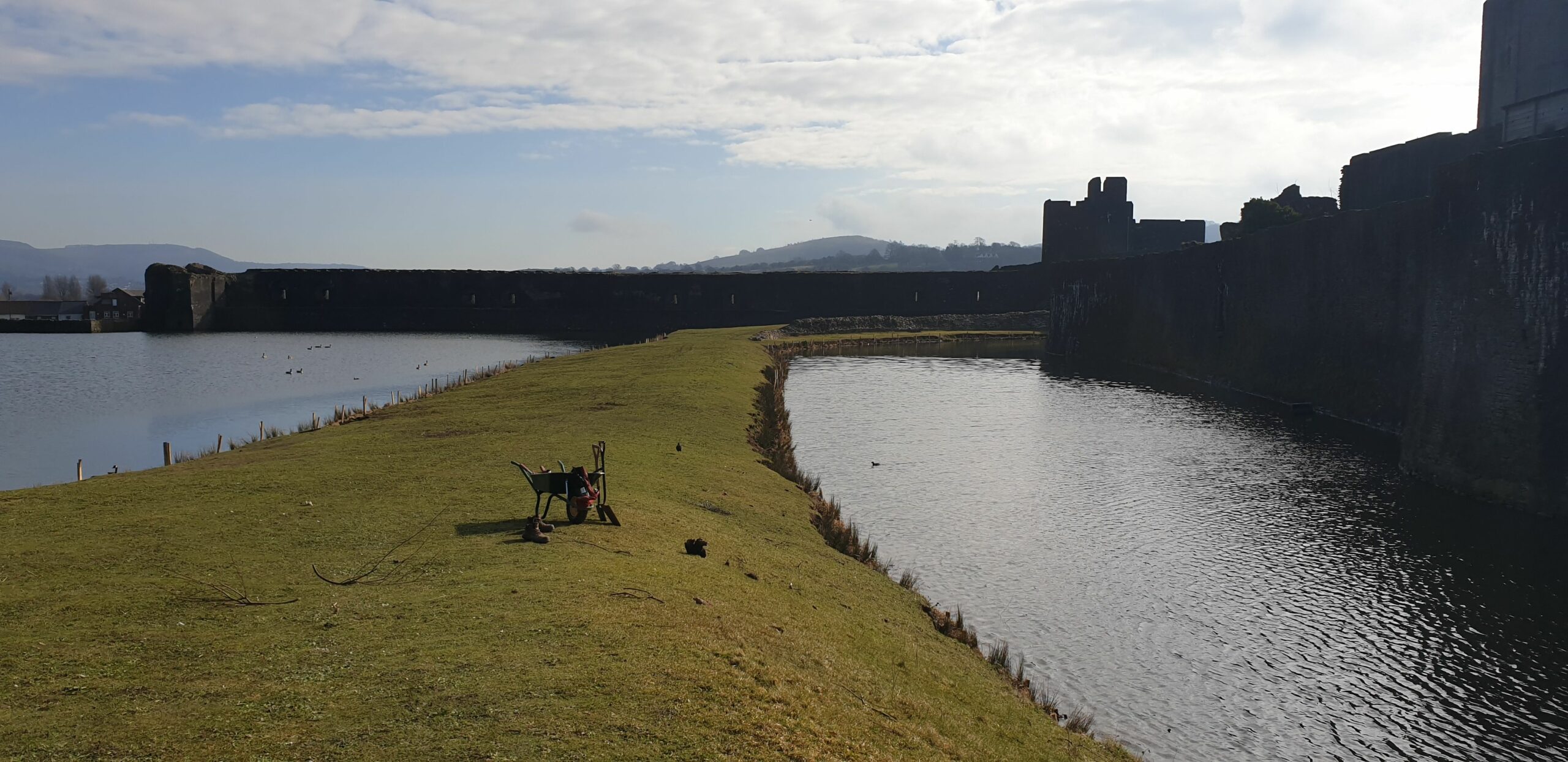
The surrounding moat had large areas devoid of vegetation with bare soils exposed along the water’s edge creating a barren site with little biodiversity. A very large Canadian Geese population has also adversely affected the surrounding banks with heavily cropped banks and compacted soils preventing wildflower and marginal plant establishment.
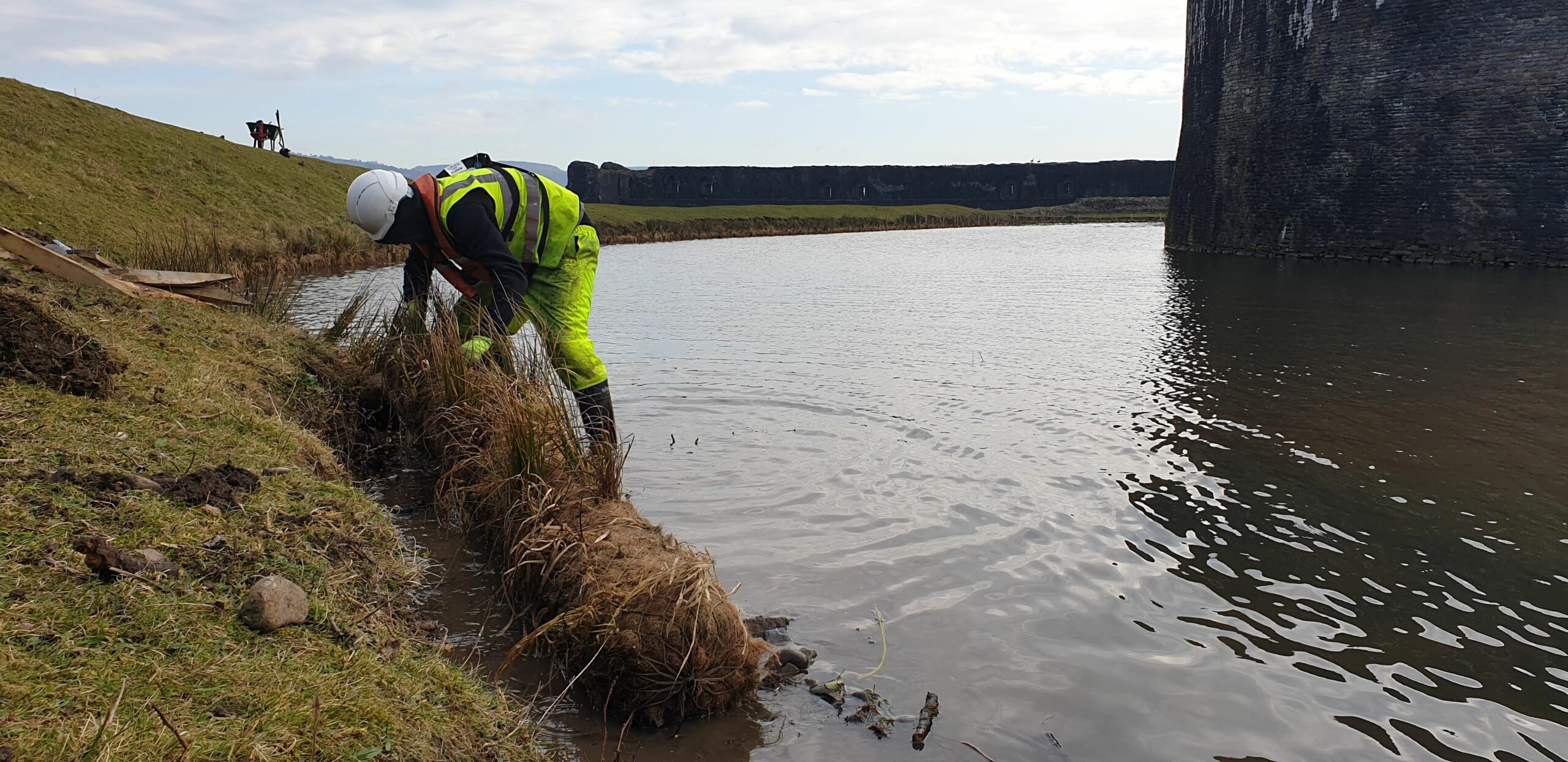
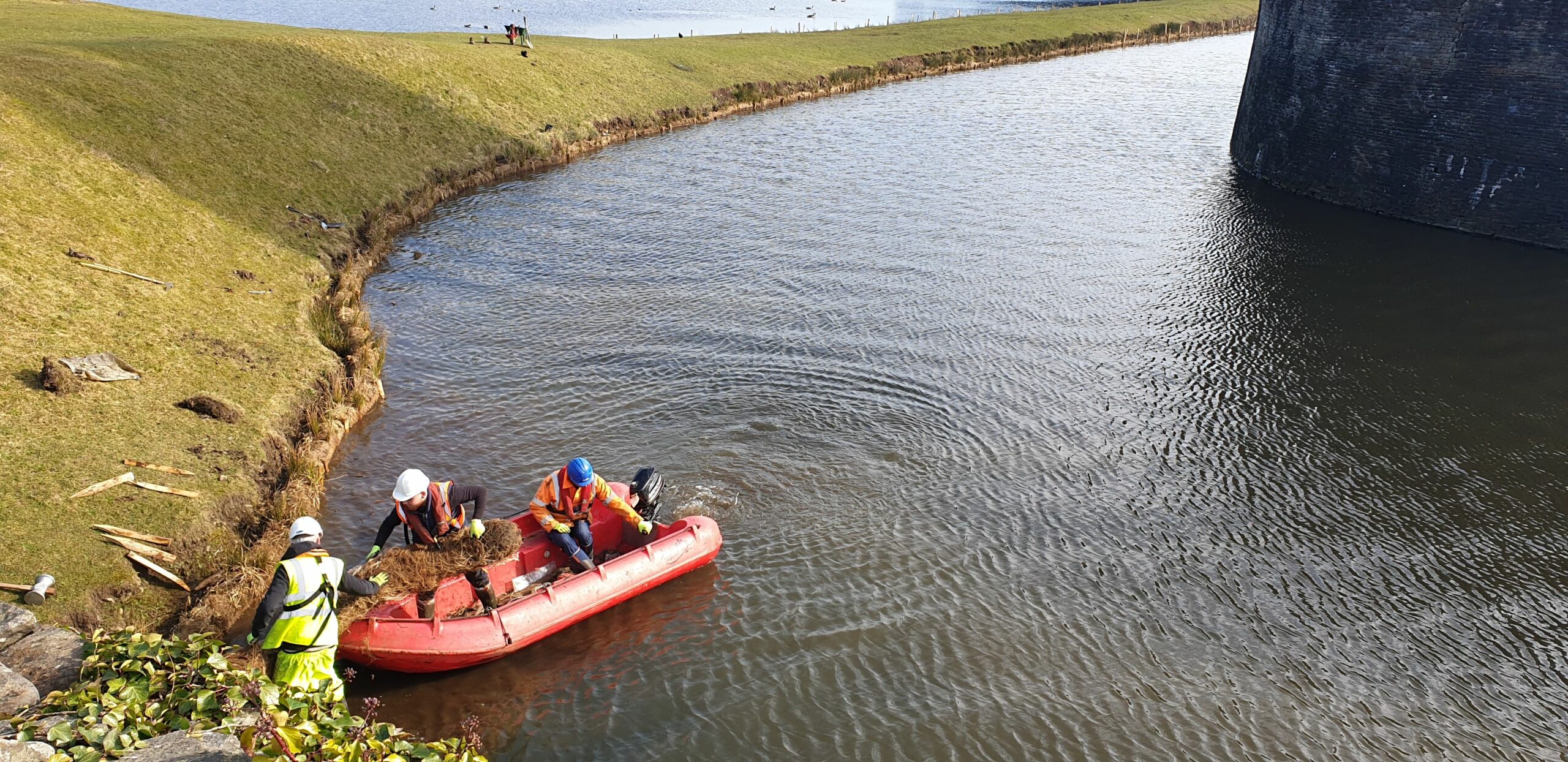
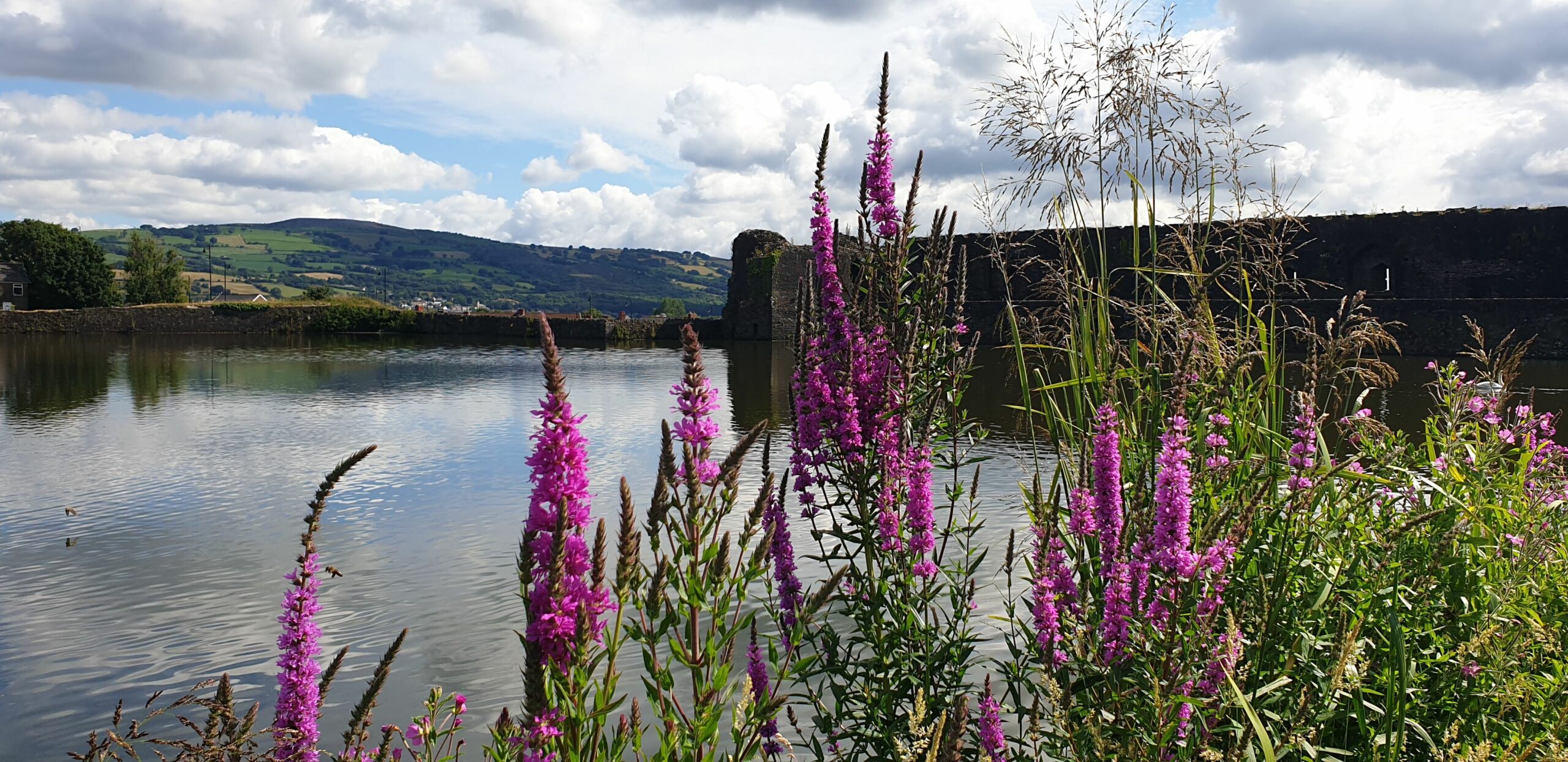
In order to resolve this, Salix supplied and installed over 700m of pre-established coir rolls as an organic revetment, preventing soil erosion along the toe of the moat. The 3m long x 300mm diameter rolls contain a variety of native marginal plants including Lythrum salicaria, Iris psuedacorus, Juncus effusus, Carex acutiformis and Phalaris arundinacea. These plants provide a good selection of flowering species to attract pollinators and strong root structures to bind the soils and prevent further erosion. The mature planting within the coir rolls is established in wet-beds at our 28 acre in-house wetland nursery for a minimum of 6 months. This solution speeds up the rate of establishment on site and provides instant wetland habitat, which will also improve water quality over time.
To protect the newly installed coir roll revetement works, anti wildflowl netting was installed along the perimeter of the works. In urban parks and areas with unnaturally high populations of wildfowl, it’s essential to provide protection of Bioengineering solutions. Without this, the Geese would have destroyed the planting and created further erosion issues. After a few seasons when the site has reached full maturity, this netting can be removed.
Boat access was required to bring materials adjacent to site works. The coir rolls and Chestnut stakes were easily transported by boat and manually installed.
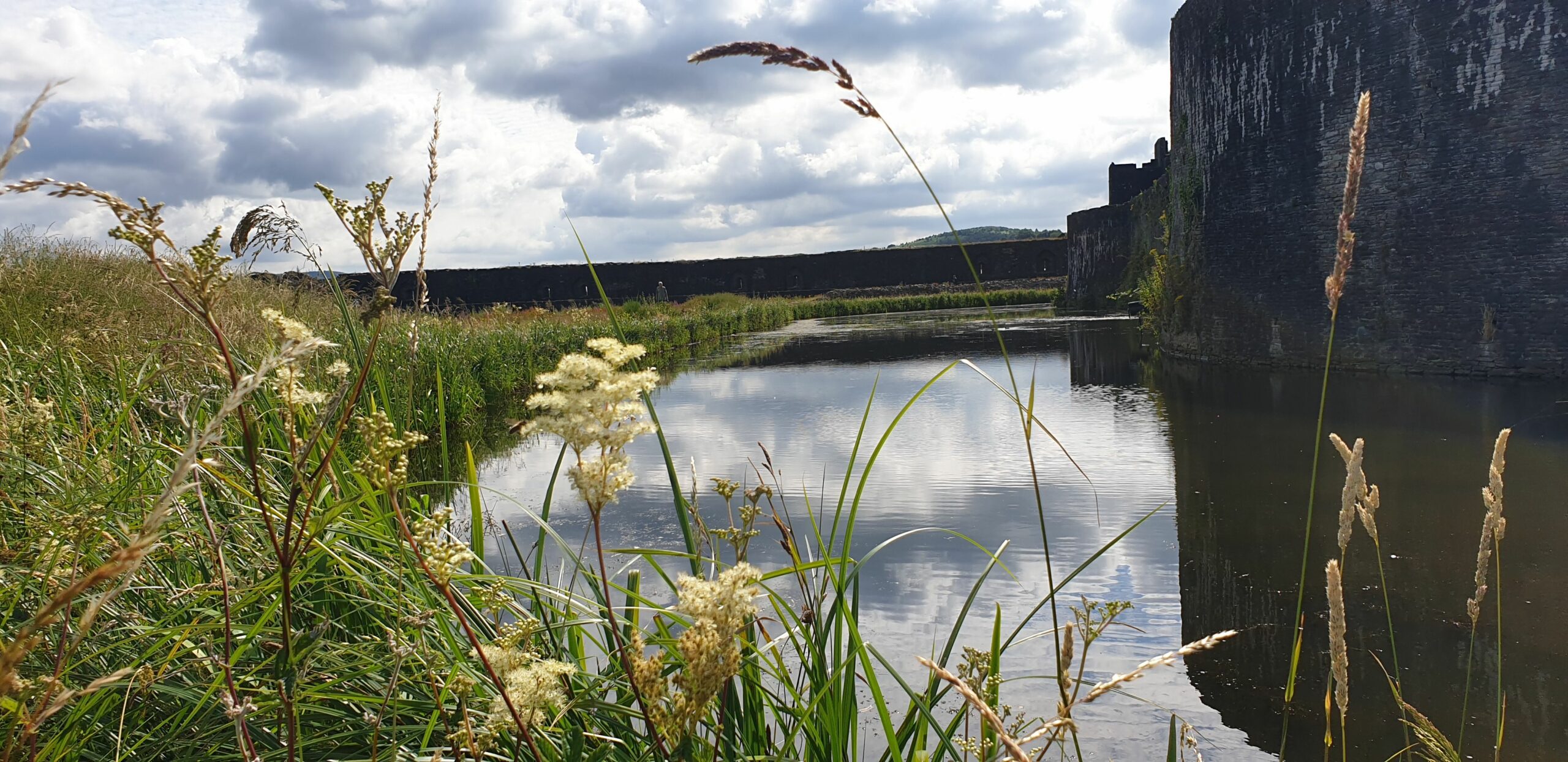
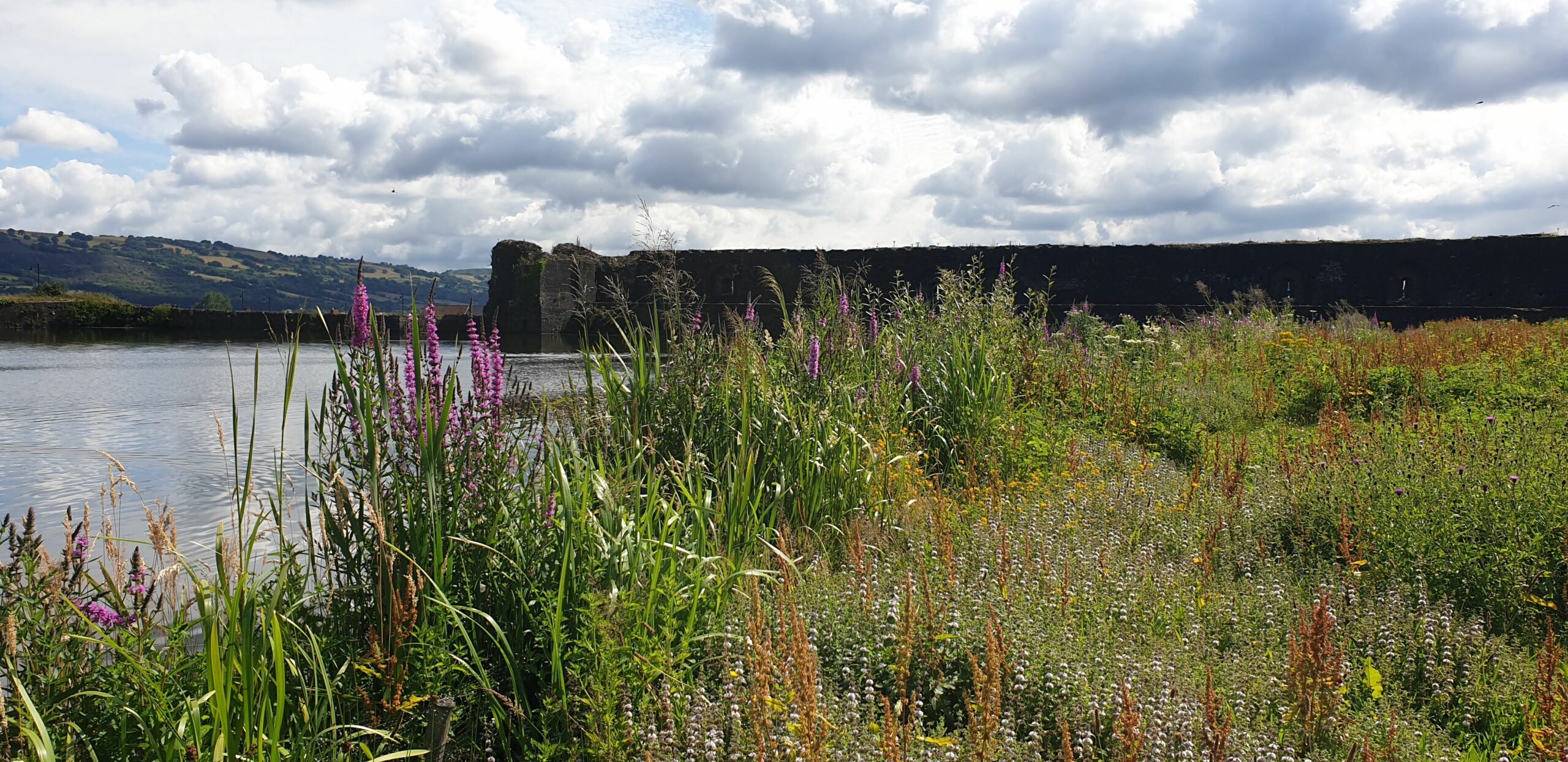
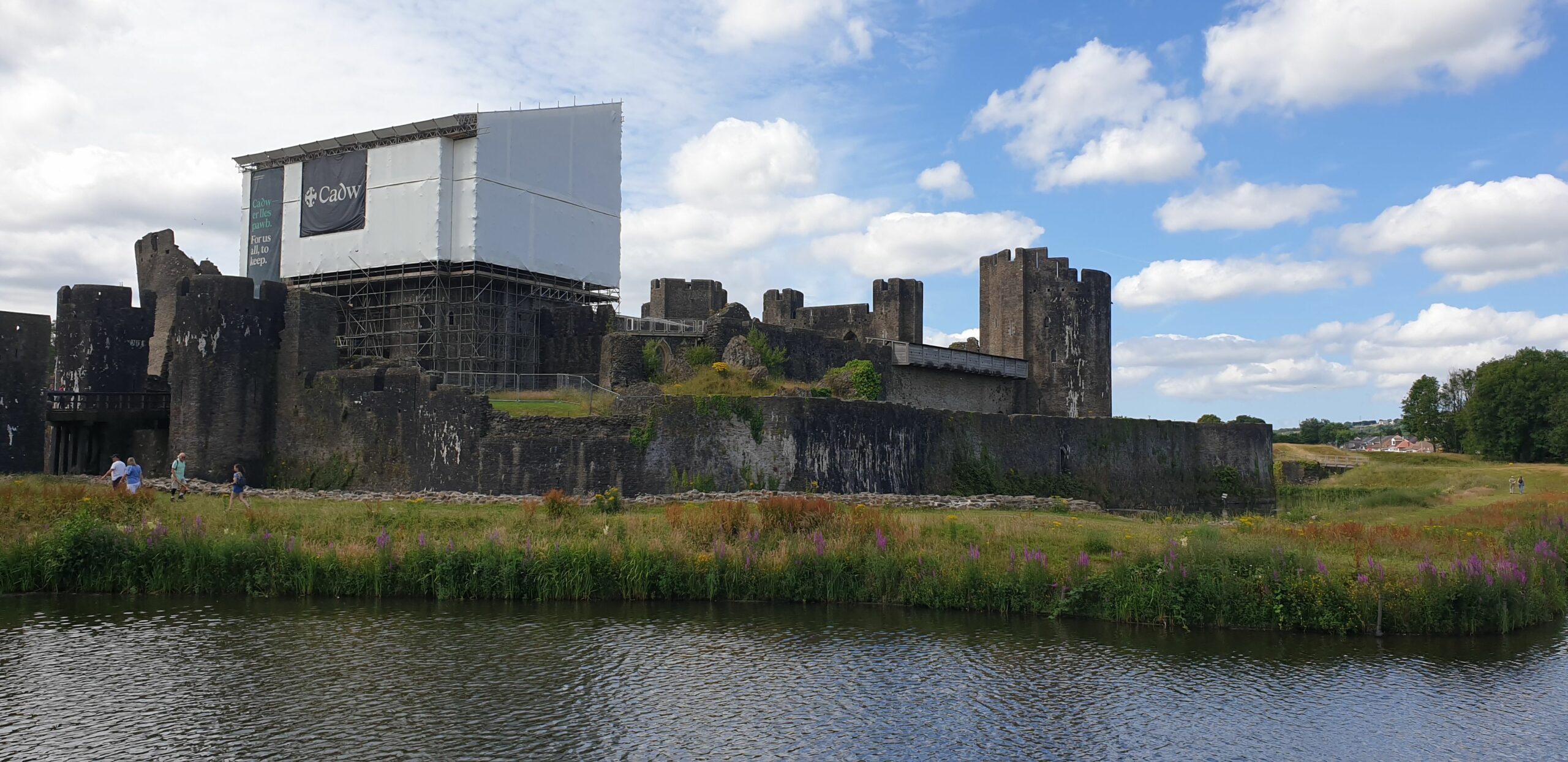
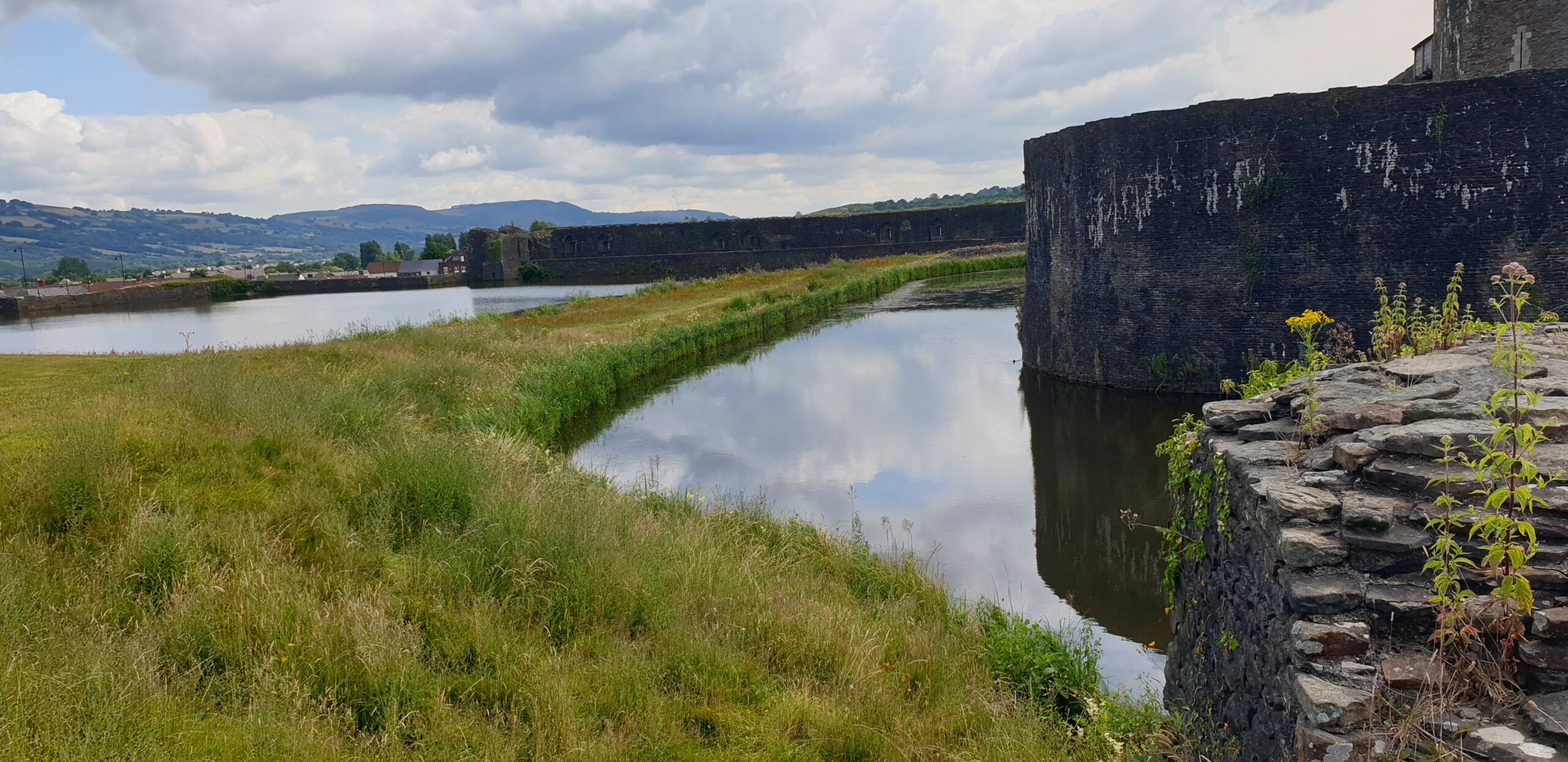
The installation works were carried out in March 2021. Just over a year later in July 2022, the area has been transformed from a barren monoculture of short, cropped grass and bare banks into a wildlife haven capable of supporting a diverse range of species as well as visually enhancing the stunning castle landscape.

Products used
-
Pre-established Coir RollsCoir Rolls are an organic living revetment that provide erosion control and rapid vegetation establishment. Salix have developed a range of specific species mixes for use in all types of water bodies.
-
Wetland PlantsSalix are the largest grower of native wetland plants in the UK – perfect for use in green infrastructure, peatland restoration, wetland creation and other habitat projects.
